
Name your method and size your organizers before you buy anything: the REAL system (remove, edit, assign, label) paired with measurements taken to the inch turns a chaotic cabinet into usable storage in a single session. Start now with a 10-minute pass: pull out everything you use daily and toss the obvious trash. The rest of this guide covers the full checklist, exact measurements to take, and which product categories actually solve the mess.
TL;DR:
- Measure internal dimensions including width, depth, and height, accounting for obstacles like pipes and hinges, before purchasing organizers.
- Expandable and adjustable under-sink organizers outperform fixed units because they adapt to irregular cabinet layouts and plumbing obstructions.
- Use side-mounted pull-outs, tiered shelving, mesh drawers, or portable caddies for efficient under-sink storage around plumbing.
- Building vertical filing systems and stacking bins in deep drawers increases usable space and keeps items visible and accessible.
- Regularly purge expired products and re-evaluate storage zones and habits to maintain long-term organization and prevent clutter.
Table of Contents
- What's the fastest way to organize a bathroom cabinet?
- The REAL method: remove, edit, assign, label
- How do you organize under-sink storage around plumbing?
- Vanity drawer organization: vertical filing and stackable bins
- Cabinet doors and vertical space you're probably wasting
- How do you measure and choose the right organizers?
- How do you keep a bathroom cabinet from getting messy again?
- What a professional organizer sees that most homeowners miss
- What professional organizing looks like if you'd rather hand it off
- Where to go for more on this
- Sources
What's the fastest way to organize a bathroom cabinet?
You don't need a weekend for this. A focused 10-minute pass gets you visible progress and a clear sense of what's actually in there.
- Pull everything out and wipe down the shelves. You cannot organize around clutter you can't see.
- Sort fast into three piles: trash, donate, keep. Check expiration dates on medicines and sunscreen. Expired sunscreen offers no protection, and old medication can lose potency or become unsafe.
- Group your keeps into rough categories: daily-use, health, beauty, tools, household basics.
- Put daily items back first, in the zone closest to the door or at eye level. Save deeper fixes, like measuring for organizers, for a follow-up session.
That fourth step matters more than it looks. Most bathroom cabinet organization problems come from daily items buried behind stuff you use twice a year.
The REAL method: remove, edit, assign, label
The REAL method is the professional organizer's shortcut for turning a messy cabinet into a working system in one sitting, not one weekend.
- Remove. Empty the cabinet completely, wipe every surface, and gather your supplies (bins, labels, a trash bag) before you touch a single product.
- Edit. Toss anything expired or empty. Donate excess toiletries you'll never use. Anything you're unsure about goes into a temporary "maybe" bin for 30 days.
- Assign. Give every category a home. Daily items get prime real estate at eye level or the front of the shelf; backstock and rarely used tools go low or high.
- Label. Use permanent labels for fixed zones (skincare, medicine, hair tools) and removable ones for anything that might shift, like seasonal items.
Pro Tip: Don't over-engineer this on day one. Set up the zones and labels first, then add decorative bins or specialty organizers once you know what actually stays put.
For a single vanity cabinet, budget a few hours. Add time if you're tackling a linen closet or a double-vanity setup at once.
How do you organize under-sink storage around plumbing?
Under-sink cabinets fight you in ways an upper cabinet never will. The P-trap eats vertical space, the garbage disposal (if you have one) claims a corner, and the clear height under the pipes is rarely uniform from one side to the other.
- Side-mounted pull-outs slide around the pipe instead of trying to fit under it, which is why they consistently test well for this exact problem.
- Tiered shelving units stack storage above the plumbing without blocking access to the shutoff valves.
- Mesh or wire drawers work for lightweight items and let you see what's inside without opening anything.
- Portable caddies are the cheapest fix and the easiest to pull out when you need to reach the pipes for maintenance.
Testing-based reviews consistently find that expandable and adjustable under-sink organizers outperform fixed-size units because they adapt to the odd angles most under-sink cabinets have. A side-mounted design like IKEA's UTRUSTA pull-out is a good example of how this category solves the plumbing problem instead of ignoring it.
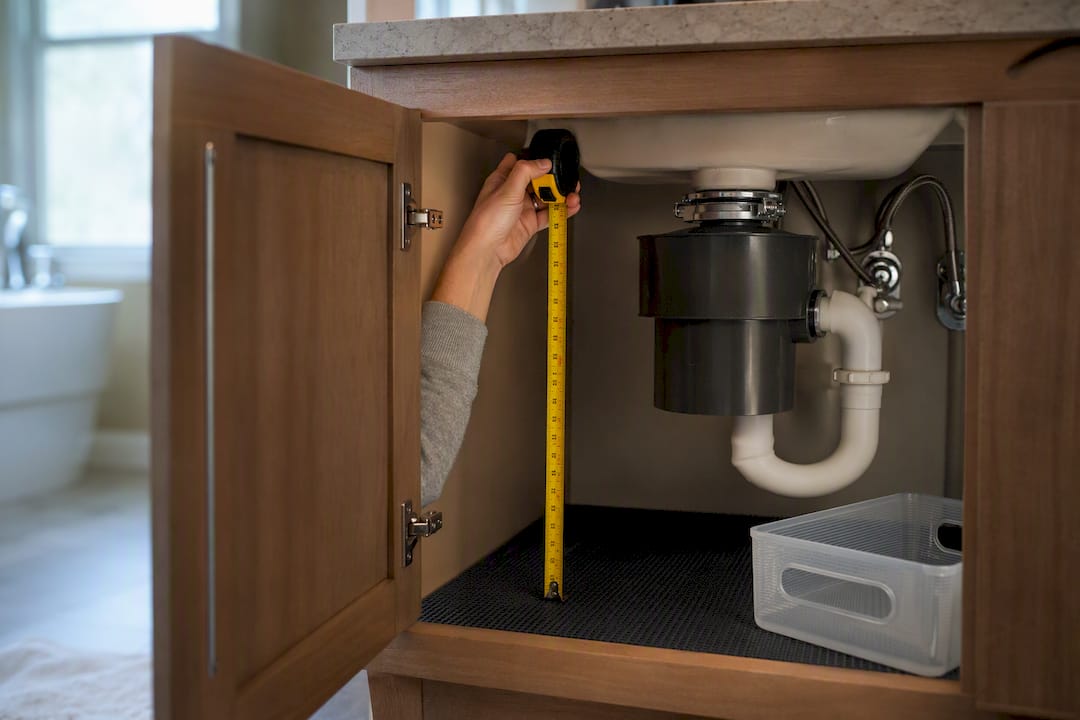
Before buying, measure width, depth, and clear height under the P-trap, and leave breathing room around the disposal unit. Once installed, add a non-slip liner and secure taller units to the cabinet wall if you have kids or pets who tend to open doors and knock things over.
Vanity drawer organization: vertical filing and stackable bins
Deep drawers waste space because everything settles into one flat layer at the bottom. The fix is to build "floors" inside the drawer using stackable, shallow bins that sit on top of each other, turning one deep drawer into two or three usable tiers, an approach The Spruce recommends for exactly this problem.
- File items vertically instead of stacking them flat. Palettes, hair tools, and rolled towels stay visible when they stand up like folders instead of piling into a heap.
- Add a silicone liner under your bins. It creates friction so bins stop sliding every time you open the drawer, and it doubles as a barrier if anything leaks.
- Interlocking bins make sense for high-traffic drawers where you're in and out daily. Standalone bins give you more flexibility to rearrange as your routine changes.
Pro Tip: Measure the drawer's interior depth before buying bins. A bin that's even half an inch too tall will keep the drawer from closing flush, and you'll notice it every single day.
Cabinet doors and vertical space you're probably wasting
The inside of a cabinet door is prime real estate that most people leave empty. Small upgrades here add real storage without touching a wall or hiring a contractor.
- Over-door bins or adhesive-mounted trays hold hair tools, brushes, and travel bottles right where you reach for them.
- Magnetic strips catch metal tweezers, nail clippers, and bobby pins that otherwise sink to the bottom of a drawer.
- Motion-sensor LED strips are a low-cost upgrade that make a real difference in dark cabinets and under-sink spaces where you're otherwise digging around blind.
- Skip adhesives on textured or painted surfaces that might peel. Screw-mounted or tension-rod hooks hold more weight and come off cleanly if you rent.
How do you measure and choose the right organizers?
Buying organizers before you measure is the single most common mistake in bathroom cabinet organization, and it's an expensive one to fix after the fact.
- Measure internal width, depth, and clear height, and note any obstacles like pipes, hinges, or a door that swings inward.
- Choose your material based on the space: plastic and acrylic wipe clean fast in humid conditions, metal holds up longer under heavier loads, and bamboo brings a warmer look but needs to stay away from direct water exposure.
- Favor width-adjustable pull-outs over fixed units if your cabinet has any irregular angles, and check the return policy before you commit.
- Bring your written measurements with you when you shop, whether that's in person or online. Guessing from memory is how mismatched bins end up back in the return pile.
How do you keep a bathroom cabinet from getting messy again?
Organizing is a one-day project. Staying organized is a habit, and it barely takes any effort once the system is set up.
- Do a quarterly purge for expired products and anything with damaged packaging.
- Run a quick monthly check on backstock items you buy often, like toothpaste or contact solution, so you're not caught short.
- Build a two-minute daily habit: put items back in their zone right after you use them instead of setting them on the counter.
- Re-evaluate your setup when your household changes, whether that's a new baby, a new skincare routine, or a kid heading off to college and freeing up a shelf.
Professional organizers point to that daily habit as the real difference maker: a cabinet only stays organized long term when items go back to their assigned zone every single time, not just on cleaning day.
What a professional organizer sees that most homeowners miss
Most people treat bathroom cabinet organization as a shopping problem. Buy the right bins, and the mess sorts itself. It doesn't. Beautiful bins holding the wrong things in the wrong place are a common pattern in many homes, because nobody measured or zoned before buying.
A pro adds the most value in three spots: custom-fitted solutions for oddly shaped cabinets, concierge coordination during a move when everything needs a home at once, and simple time recovery for homeowners who don't have a free afternoon to dedicate to a drawer. If you're doing this yourself, keep it to three rules: measure first, zone by how you actually move through your morning, and invest in one durable solution rather than five cheap ones you'll replace within a year.
— Steve
What professional organizing looks like if you'd rather hand it off
Some homeowners finish the REAL method in an afternoon and never think about their cabinets again. Others get through step one, remove, and realize they'd rather spend that Saturday doing anything else. That's a service gap some professional organizers fill.

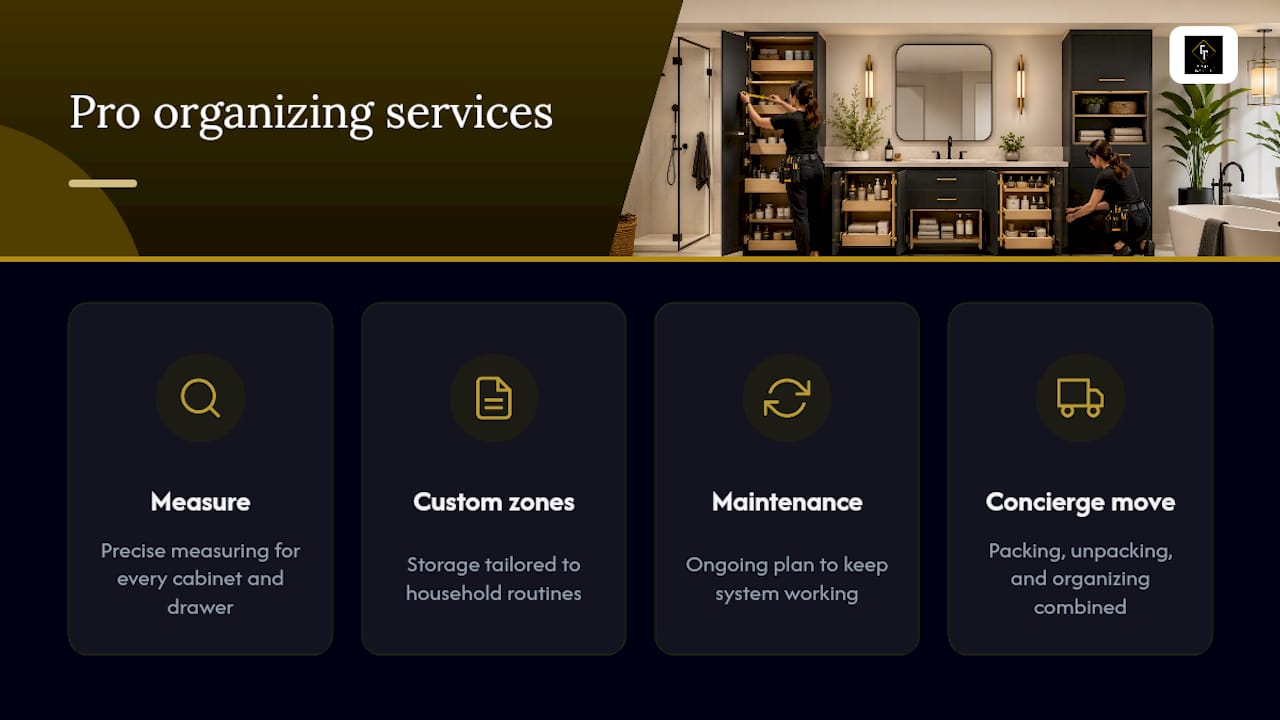
A typical professional organizing engagement includes precise measuring for every cabinet and drawer, custom-zoned storage tailored to household routines, and a maintenance plan to keep the system working. For homeowners in the middle of a move, concierge moving management can fold packing, unpacking, and organizing into one coordinated process rather than separate tasks. If built-in systems are more your style, our partners at One Day Doors & Closets also handle custom closet and cabinet builds around San Antonio.
If your cabinets need more than a Saturday can fix, explore our luxury home organizing services and request a consult to get a plan built around your actual space.
Where to go for more on this
For the full step-by-step breakdown behind the REAL method, read Real Simple's original guide. For product research, search for under-sink pull-outs, stackable drawer bins, drawer dividers, and silicone shelf liners, the four categories that solve most cabinet problems.
Sources
- How to Use the 'REAL' Method to Finally Organize Your Messy Bathroom Cabinets in Less Than a Day
- The best under-sink organizers (testing-based roundup)
- UTRUSTA under-sink organiser, product page (IKEA)