

Bubble wrap provides superior cushioning against drops and impacts; packing paper is better for surface protection, filling voids, and saving space. Most professional packers use both on the same box, layering paper against the item’s surface and bubble wrap around the outside for shock absorption. At Flawlessly Functional, we use professional packers who make that call item by item during every concierge move, not by defaulting to one material for everything.
TL;DR:
Bubble wrap provides superior impact absorption, especially for fragile items like stemware, delicate glass, and irregularly shaped objects, requiring multiple layers for long moves.
Packing paper is best for surface protection and filling voids, but less effective against drops, and is more space-efficient and eco-friendly for storing and disposal.
Combining both materials—placing paper against surfaces and bubble wrap around shock points—offers optimal protection for most items.
Anti-static bubble wrap is recommended for electronics with circuit boards, while standard bubble wrap may pose static risks.
Moving longer distances, handling high-value or fragile items, or short on storage space favors bubble wrap or professional packing assistance.
Table of Contents
-
Packing Paper: Surface Protection, Space Savings, and Its Limits
-
Recycling, Cost, and Storage: Where Each Material Actually Costs You
Bubble Wrap vs Packing Paper by Item Type
The right material depends less on how expensive an item is and more on whether it can survive a scratch or whether it can survive a drop. Here’s how that breaks down across the items people worry about most.
-
Dishes and stackable plates: Wrap each plate in packing paper before stacking them on their edge (never flat). For a short local move, paper alone is often sufficient. For moves involving longer distances or rental trucks, adding a bubble wrap sleeve around the stack provides additional impact protection.
-
Stemware and delicate glass: This is bubble wrap territory. Wrap stems and bowls in two to three layers, twisting the excess at the base like a candy wrapper. A layer of packing paper underneath the bubble wrap prevents the plastic from pressing marks into fine crystal during long transit.
-
Electronics: Original manufacturer packaging beats anything you can improvise. If that’s gone, use anti-static bubble wrap, since mover guidance flags standard bubble wrap’s static charge as a risk near circuit boards. Packing paper works fine for screen surfaces but does nothing for shock.
-
Mirrors and framed art: Paper directly on the glass face to prevent scratching, then bubble wrap wrapped around the edges and corners, which is where breaks actually start.
-
Large or oddly shaped items (lamps, vases, sculptures): Bubble wrap conforms to curves and irregular shapes in a way flat paper can’t. This is where the material earns its reputation.
Packing guides consistently land on the same split: paper for surfaces, bubble wrap for shock. The exceptions are narrow enough that you rarely need to guess.
Bubble Wrap: What It Protects Best and Where It Falls Short
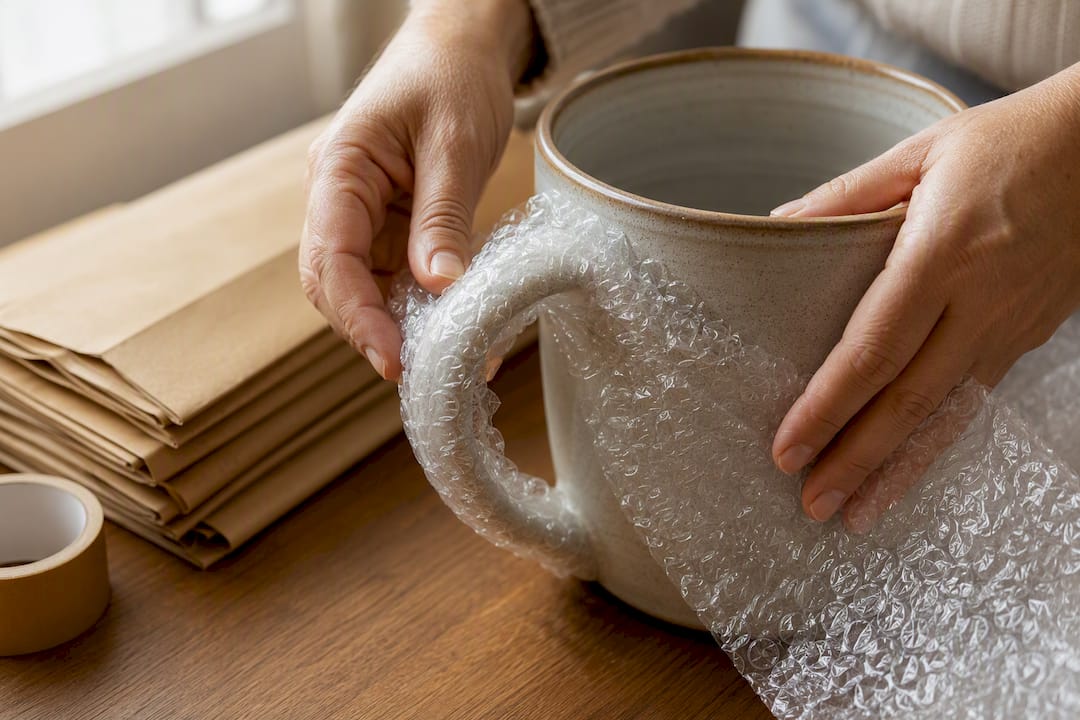
The air pockets in bubble wrap absorb impact energy the moment an item gets bumped, which is why multiple layers matter more for long moves or rough handling than a single wrap. That cushioning is the entire reason the material exists.
-
Conforms to odd shapes better than any flat material.
-
Lightweight relative to the protection it provides.
-
Comes in rolls, pre-cut sheets, bags, and envelopes for different job sizes.
-
Bulky to store between moves, since a roll takes up real shelf space.
-
Recycling is inconsistent. Standard bubble wrap is plastic film that most municipal curbside programs reject, so it usually needs a store drop-off.
-
Can puncture on sharp corners, which erases the cushioning right where you need it.
Small-bubble wrap suits delicate items where you want tight, controlled cushioning. Large-bubble wrap handles heavier impact loads. Anti-static bubble wrap is worth the extra cost anytime a box contains anything with a circuit board.
Pro Tip: Wrap the weakest point of an item first, whether that’s a handle, a rim, or a stem, then work outward. Reinforcing the strongest part of an object and skipping the fragile joint is the most common packing mistake.
Packing Paper: Surface Protection, Space Savings, and Its Limits
Crumpled packing paper cushions mostly by filling gaps, not by absorbing shock the way trapped air does. That makes it excellent at preventing scratches and chips but weaker against a genuine drop.
-
Stacks flat and stores in a fraction of the space bubble wrap needs.
-
Biodegradable and easy to recycle curbside in most areas.
-
Cheap enough to use generously without worrying about running out.
-
Tears against sharp edges or corners, especially on glass and ceramics.
-
Provides less protection than bubble wrap against heavy impact.
-
Wrapping multiple layers by hand takes longer than grabbing a bubble wrap sheet.
One packing detail people get wrong constantly: skip newspaper entirely. The ink transfers onto dishes and glassware, and you’ll be scrubbing print smudges off your grandmother’s china for a week. Buy actual packing paper. It costs little and it’s clean.
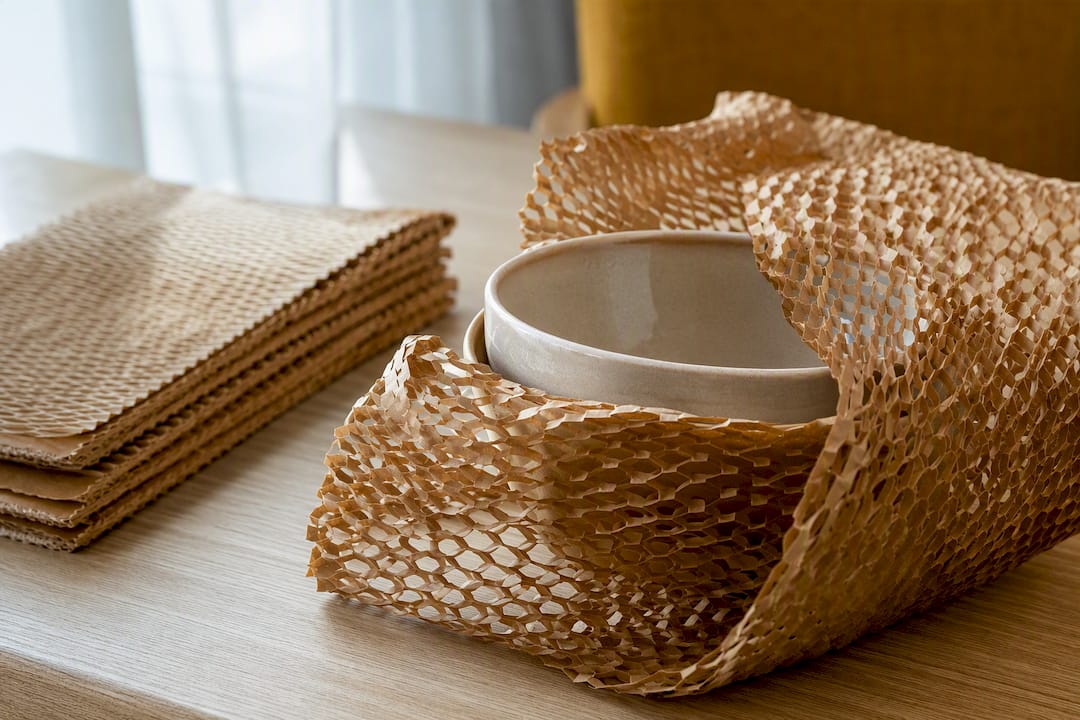
Honeycomb, or “pop-up,” packing paper closes some of the cushioning gap. Its 3D structure gives it shock absorption closer to bubble wrap while staying plastic-free, and firsthand testing found it handled everyday household items well as a more eco-conscious swap.
Recycling, Cost, and Storage: Where Each Material Actually Costs You
Packing paper is the cleaner material at the end of a move. It’s biodegradable and curbside-recyclable in most areas, while standard bubble wrap’s plastic film usually needs a store drop-off program that most people never bother finding.
The trade-off in one line: paper wins on disposal, bubble wrap wins on protection per pound, and honeycomb paper is the closest thing to getting both.
-
Bubble wrap rolls take up real shelf or closet space between uses.
-
Packing paper stores flat in a box or drawer, taking up a fraction of that footprint.
-
Honeycomb paper reduces plastic waste while folding down more compactly than a bubble wrap roll.
-
Bubble wrap generally costs more per square foot than packing paper for the same coverage.
If you’re storing packing supplies in a garage or closet for future use, paper’s flat storage profile alone makes it the more practical long-term buy.
How to Combine Bubble Wrap and Packing Paper the Right Way
The most reliable method is a two-layer system: packing paper directly against the item to stop scratches, then bubble wrap around that layer to absorb shock. Skipping either step leaves a gap in protection.
-
Wrap plates and bowls in paper, bundle three or four together, then wrap the bundle in bubble wrap before boxing it upright.
-
For a vase or lamp, paper first around the body, bubble wrap next with extra wraps at the neck or base.
-
For framed art or mirrors, paper flat against the glass, bubble wrap around all four edges and corners, then a flattened box or cardboard corner protectors on the outside.
-
For electronics, original packaging if you have it; otherwise anti-static bubble wrap, with paper used only to fill remaining void space.
Pro Tip: Label every box with the room, the contents, and the word “fragile” on at least two sides, not just the top. Movers set boxes down in whatever orientation is closest.
A Quick Checklist for Choosing Your Packing Material
Run through this before you buy a single roll of anything:
-
Fragility level: low, medium, or high. High-fragility items (glass, crystal, electronics) default to bubble wrap.
-
Transit distance and handling: a local move in your own car tolerates less cushioning than a long-haul move with multiple handlers.
-
Storage space: if you’re short on room to store supplies, packing paper’s flat profile wins.
-
Recycling preference: if disposal matters to you, packing paper or honeycomb paper is the cleaner choice.
-
Budget: paper is cheaper per box; bubble wrap costs more but reduces breakage risk on high-value items.
Red flags that push you toward bubble wrap or a professional packer: heirlooms, anything with a resale value you’d regret losing, glass over a certain size, or a move involving stairs and a rental truck.
Packing plan template: paper against the surface, bubble wrap around the outside, crumpled paper filling any remaining voids, then a snug box with no shifting room when you shake it gently.
Which Material Packs Faster
Bubble wrap wins on speed for irregular shapes because it stretches and conforms in one motion. Wrapping a lamp base or a ceramic figurine in paper means folding and tucking around every curve, which takes longer and often leaves gaps.
Packing paper wins on speed for flat, repetitive items like plates. Grab a sheet, wrap, stack, repeat. Once you get a rhythm going with dishes, paper is often faster than fumbling with bubble wrap’s stickier surface and awkward tape points.
For boxes with mixed contents, expect packing time to run longer overall since you’re switching materials mid-box. That’s the real cost of combining them: better protection, slower packing. If you’re on a moving deadline with dozens of boxes to fill, that time adds up fast, which is one reason people hire packing help for the final stretch rather than trying to do it all themselves the week of the move.
Damage Risks You Might Not Expect From Each Material
Bubble wrap’s biggest hidden risk isn’t the drop, it’s static. Anti-static bubble wrap exists specifically because standard bubble wrap can build a static charge against circuit boards, which matters for anything with exposed electronics, like a computer tower with the side panel off or spare hard drives. Regular bubble wrap on a sealed laptop is fine. Regular bubble wrap directly against an open circuit board is not.
Packing paper’s biggest risk is ink transfer, and this is where newsprint specifically causes problems. Newspaper’s ink smudges onto glossy and porous surfaces, staining dishware, wood finishes, and light-colored fabrics. Dedicated packing paper is uninked and avoids this entirely.
There’s a third risk that shows up regardless of material: over-taping. Wrapping tape directly onto a delicate finish, like painted wood or a lacquered frame, can pull paint or finish off when removed later. Tape the wrap, never the item.
Why We Rarely Default to One Material
Most people ask “which is better” as if there’s a single right answer, but the better question is what’s actually vulnerable about this particular object. On a concierge move, we look at three things: what the item is made of, what’s the weakest point on it, and how many hands will touch it before it reaches its destination. Answering those three questions makes the bubble wrap versus paper decision almost automatic.
We’ve handled everything from vintage china to gallery-worthy mirrors, and the packing choice always traces back to the object’s weak point, not its price tag. A cheap ceramic vase with a hairline crack needs more care than an expensive but solid glass table.
One habit worth stealing: pack the box, then pick it up and gently shake it before sealing. If you hear or feel movement, add more filler before it leaves your hands.
— Steve
A Simpler Way to Handle Your Next Move
If reading through wrap-then-layer techniques and static-electricity warnings makes you want someone else to handle it, that instinct is worth listening to. Flawlessly Functional runs professional packing and moving management for San Antonio homeowners who’d rather not spend a weekend testing bubble wrap against packing paper on their own china.

Our team decides material by item, the same logic covered above, but applied by people who’ve packed hundreds of moves and know exactly where a mirror frame or a stemware box tends to fail. That matters most for valuable, sentimental, or oddly shaped pieces, and for anyone short on time before moving day. It’s also where our organizing expertise comes in after the move, turning unpacked boxes into a home that actually functions. If your move includes anything you’d hate to see arrive broken, get in touch and we’ll walk you through what a concierge move looks like for your specific home.
Sources
-
Honeycomb paper vs bubble wrap: which is better? — SelectPackTech
-
This Plastic-Free Packing Paper Is Better Than Bubble Wrap — The Strategist
-
Bubble Wrap vs Packing Paper: Which Is Better for Different Items? — Boxes And Bubble
-
Bubble Wrap vs. Packing Paper: The Ultimate Showdown — MovingHelp