
The best eco-friendly moving strategy is simple: declutter aggressively before you pack, replace disposable materials with things you already own, and right-size your transport to cut trips and fuel use. Start by scheduling donation drop-offs for anything you won't use in your next home, then swap bubble wrap for towels and blankets. Book a mover with EPA SmartWay certification or a reusable-bin rental if either is available near you.
TL;DR:
- Decluttering six to eight weeks before moving significantly reduces truck size and trip count, lowering overall carbon emissions.
- Using household textiles like towels, blankets, and suitcases for packing can replace disposable materials and be reused in future moves.
- Renting reusable plastic bins offers a more sustainable alternative to cardboard boxes, especially if suppliers sanitize and redeploy them efficiently.
- Choosing EPA SmartWay certified movers and consolidating errands can substantially cut fuel consumption and emissions on moving day.
- Proper waste management, including responsible donation and disposal of hazardous materials, is vital for maintaining low-waste moving practices.
Table of Contents
- What Does Eco-Friendly Moving Actually Mean?
- Pack Smarter With Reusable Padding and Household Textiles
- Should You Rent Reusable Bins or Reuse Cardboard Boxes?
- How Do You Choose a Greener Mover?
- What Should You Do on Move Day to Cut Waste?
- How Do You Set Up a Greener Home After the Move?
- Can a Moving Concierge Actually Make Your Move Greener?
- A Realistic Note on Doing This Well
- Let Flawlessly Functional Handle the Heavy Lifting
- Where to Verify These Claims and Find Reuse Partners
- Sources
- FAQ
What Does Eco-Friendly Moving Actually Mean?
Eco-friendly moving means reducing the waste and carbon output of relocating, mostly by cutting what you move, reusing what you can, and choosing lower-emission transport. It's not about buying a new set of "green" packing products. Sustainable relocation, sometimes called zero waste moving, works best when it starts with subtraction, not substitution.
Declutter, donate, and dispose responsibly before you pack
Every box you don't pack is fuel you don't burn. A smaller inventory means a smaller truck, fewer trips, and less packing material altogether, and green moving guidance consistently ranks decluttering as the single highest-impact step in any low-waste move. One analysis of moving-day carbon reduction found that clearing out unused belongings months in advance reduces truck size and trip count more than any other single change you can make.
Give yourself six to eight weeks if you can. That's enough time to sort a whole house without dumping everything in the trash the week before your move.
- Six to eight weeks out: walk each room and flag anything you haven't used in a year.
- Five weeks out: sort flagged items into donate, sell, recycle, and toss piles.
- Four weeks out: schedule donation pickups or drop-off appointments so items don't sit in limbo.
- Two to three weeks out: handle hazardous materials (paint, batteries, propane) through your municipal collection program, since most curbside services won't take them.
- One week out: do a final walkthrough for anything missed in closets, garages, or storage units.
For donations, a few channels do most of the heavy lifting:
- Habitat for Humanity ReStore accepts furniture, appliances, and building materials in usable condition and resells them to fund local housing projects, per Habitat for Humanity's ReStore program.
- Goodwill and Salvation Army take clothing, housewares, and small furniture, though both have size and condition limits, so call ahead for large items.
- Move For Hunger coordinates with participating movers to collect nonperishable food you'd otherwise toss before a move, redirecting it to local food banks instead of the trash.
Planning your inventory this early also lets you right-size your truck instead of guessing and overbooking.
Pack Smarter With Reusable Padding and Household Textiles
Cardboard and bubble wrap aren't the only way to protect your belongings. Most households already own everything they need for padding and cushioning, they just haven't thought to use it that way.
Try these swaps before buying a single roll of bubble wrap:
- Towels and bath linens wrap dishes and glassware better than newspaper, and they don't leave ink residue.
- Balled-up socks slide over stemware and wine glasses for a snug, cushioned fit.
- Bed sheets and blankets wrap framed art, mirrors, and lamp shades.
- Suitcases and rolling bins carry books and shoes instead of new boxes.
- Dresser drawers stay loaded with folded clothes, so you skip separate wardrobe boxes entirely.
For anything that still needs extra protection, choose paper tape over plastic packing tape and compostable packing peanuts over foam. Both break down instead of sitting in a landfill for decades.
Rolling clothes instead of folding saves space and reduces the number of boxes you need for the same closet. Pack over several days, room by room, rather than cramming everything into one exhausting weekend. That pacing reduces the chance you'll grab single-use materials out of panic at 11 p.m.
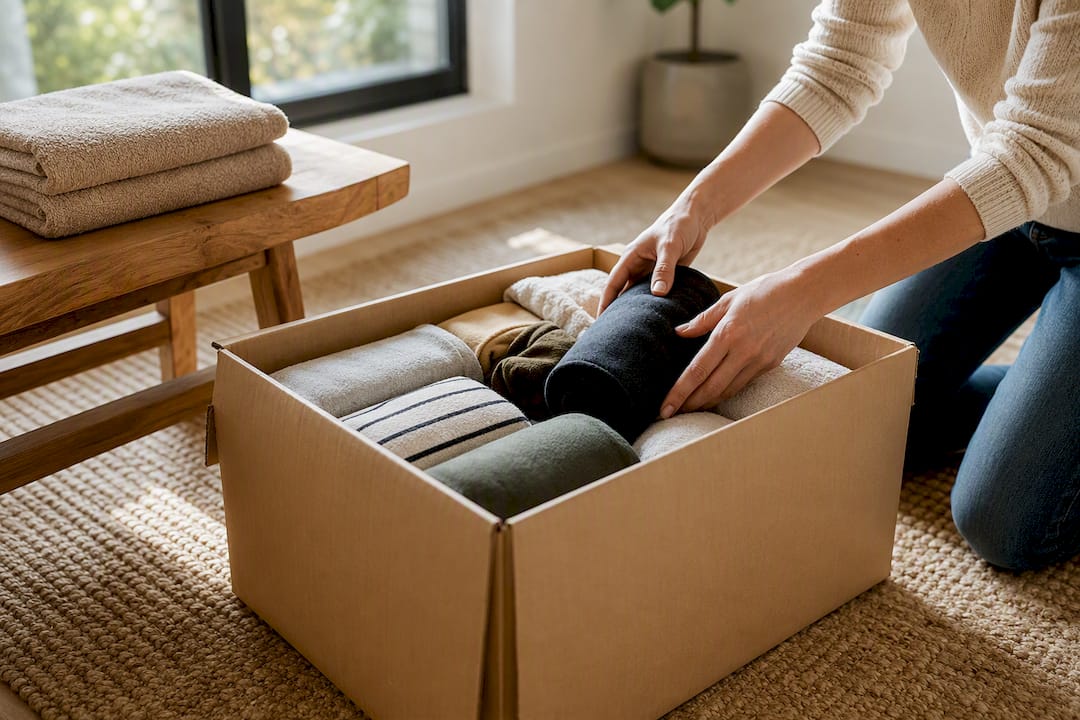
Pro Tip: Keep padding materials clean and wrinkled as you pack, and set them aside afterward instead of trashing them. Folded towels and flattened boxes go right back into circulation for your next move or a neighbor's. Save any shipping labels or barcodes from boxes you plan to resell or hand off, since some reuse marketplaces ask for a clean, label-free box.
Should You Rent Reusable Bins or Reuse Cardboard Boxes?
Rentable plastic bins beat single-use cardboard on nearly every environmental measure, provided the rental company actually keeps them in circulation. A single set of rental bins typically replaces dozens of cardboard boxes per move, and vendors sanitize and redeploy them for the next customer instead of sending them to recycling or the landfill.
The average household uses far more cardboard boxes than most people expect for a single move, and most of those boxes get flattened and tossed within weeks. A rental fleet cycling through customer after customer avoids that one-and-done waste pattern almost entirely.
Before booking a bin rental, ask the vendor:
- How are bins sanitized between customers, and is that included in the price?
- What's the pickup window after your move, and is there a fee for holding bins longer?
- Is the charge a flat rental fee or a refundable deposit, and what happens if a bin is lost or damaged?
- Does the company carry insurance for damaged items packed in their bins?
If bin rental isn't available in your area, used cardboard is the next-best option. Liquor stores often give away sturdy boxes for free, and local Buy Nothing groups and box-exchange marketplaces connect you with neighbors who just finished their own move. If you do need to buy boxes, look for ones made with high recycled content and skip the glossy printed versions, which are harder to recycle later.
How Do You Choose a Greener Mover?
Right-sizing your truck starts with an honest inventory. A one-bedroom apartment typically fits in a 10 to 15-foot truck, a three-bedroom house usually needs 20 to 26 feet, and going one size too big wastes fuel hauling empty space across town.
When vetting movers, treat sustainability claims the way you'd treat any other marketing copy: verify them.
- Ask whether the company holds EPA SmartWay certification, which signals a fleet that meets federal fuel-efficiency and emissions benchmarks.
- Ask for documentation on fuel-efficient or electric vehicles rather than accepting a vague "we're green" claim, since verifying certifications directly beats trusting a company's own marketing.
- Ask if they use reusable moving blankets and straps instead of plastic shrink wrap.
- Ask about carbon offset programs, and request specifics on which registry or standard they use rather than a generic "we offset our emissions" line.
Offsets make sense as a last step, after you've already cut what you can through decluttering and route planning. They're not a substitute for driving less.
Consolidate errands into the move itself. Combine your donation drop-off, junk removal, and final trash run into one route instead of three separate car trips. Book your moving day outside rush hour where you can. Idling in traffic burns fuel for zero benefit and adds unnecessary time to a day that's already long.
What Should You Do on Move Day to Cut Waste?
Move day is where planning either pays off or falls apart. A few habits keep it running clean.
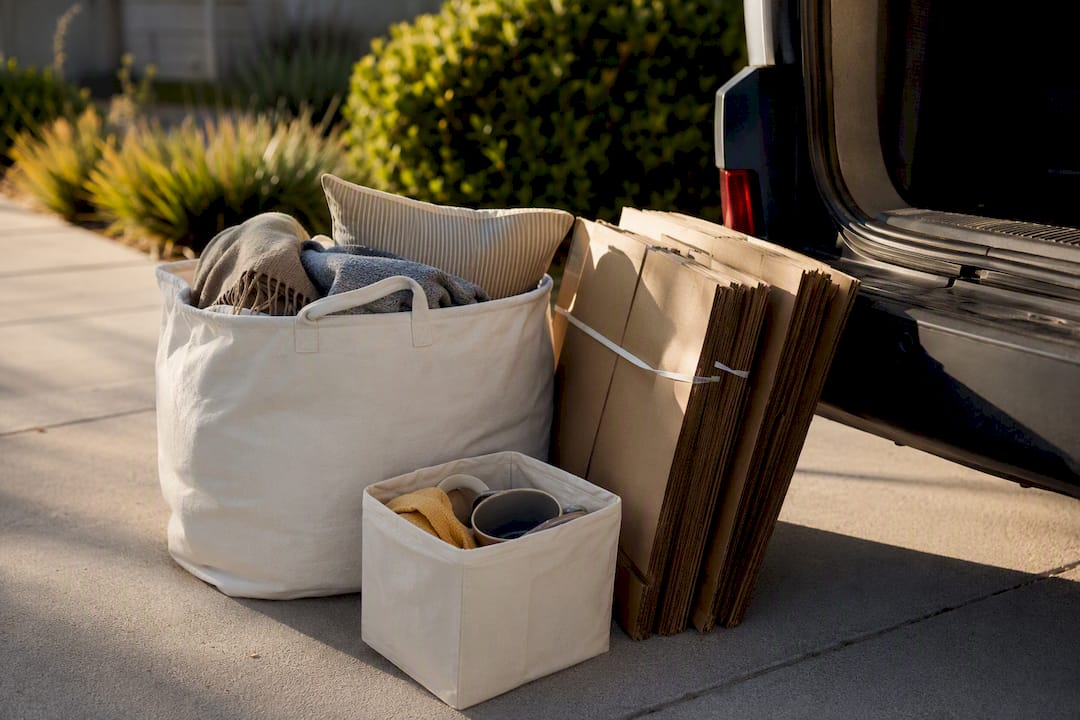
Route your truck to avoid known traffic bottlenecks and schedule loading for off-peak hours when you have flexibility. Less idling means less wasted fuel, and it makes for a shorter day. Use moving blankets, furniture pads, and ratchet straps instead of stretch-wrap plastic film, which usually ends up in the trash within hours of arriving at your new place. Pack a small cooler for perishables so nothing spoils in transit, and keep cleaning liquids and aerosols upright and separated so nothing leaks into your boxes.
- Assign one person to handle rental bin pickup so they're returned on schedule.
- Assign another to drop donation boxes at ReStore or Goodwill on the way to the new place.
- Do a final sweep of the old home for anything left behind, including recyclables in the garage or shed.
- Confirm hazardous items (paint, propane, batteries) went to a collection site, not the truck.
How Do You Set Up a Greener Home After the Move?
Unpacking is where a lot of the waste from earlier steps either gets undone or locked in. Flatten cardboard boxes right away and check whether your new city's recycling program accepts them curbside, since most municipal programs do accept clean cardboard as part of standard recycling streams.
Return rental bins on schedule, and post any leftover packing paper or unused boxes to a local Buy Nothing group within a day or two, before you forget. A few small setup choices make the new place run leaner from the start, like choosing eco-friendly kitchen cabinets to enhance your sustainable home setup.
- Swap incoming light bulbs for LEDs as you unpack lamps and fixtures.
- Set up a compost bin in the kitchen before your first grocery run.
- Stock low-VOC cleaning products for move-out and move-in cleaning instead of harsh conventional ones.
- Designate a recycling station near the kitchen so the habit sticks from week one.
Check for a local tool library or sustainability organization if you're setting up a new home from scratch. Many lend out equipment you'd otherwise buy once and never use again.
Can a Moving Concierge Actually Make Your Move Greener?
Hiring help makes sense when you have a short timeline, a large household, or simply no bandwidth to run a six-week decluttering plan solo. A moving management concierge typically handles the full inventory, packs using reusable totes and padding instead of single-use materials, coordinates donation pickups, and schedules transport to minimize trips.
Before hiring anyone, ask a short set of questions:
- Do they reuse totes, bins, or padding across projects instead of buying new cardboard for every job?
- Do they have existing donation partnerships, or do you have to arrange drop-offs yourself?
- Do they sanitize reusable materials between clients?
DIY works fine for smaller households with time to spare. A concierge earns its keep when your calendar doesn't leave room for a proper decluttering runway.
A Realistic Note on Doing This Well
Nobody nails a zero-waste move on the first try, and that's fine. The early decisions, what you keep, what you donate, what you reuse instead of buy, do more for your footprint than any last-minute scramble for eco-friendly packing materials ever will.
Start one habit now: keep a donation box in a closet and add to it weekly, starting today, whether or not a move is on the calendar yet.
— Steve
Let Flawlessly Functional Handle the Heavy Lifting
Some moving concierge services offer alternatives to generic moving companies by helping homeowners manage donation runs and packing decisions for a lower-waste move. Our moving management concierge builds your inventory, packs with reusable materials, and coordinates donations so nothing usable ends up in a landfill, while our team schedules transport to cut unnecessary trips.

If your move is tangled up with a bigger decluttering project, our luxury home organizing service can tackle the sorting and system-building before a single box gets packed, so you're not making donate-or-keep decisions at midnight the week of your move. Homeowners in San Antonio can reach out for a consultation to map out a move that's lower on waste and lower on stress from day one.
Where to Verify These Claims and Find Reuse Partners
- EPA SmartWay: federal fuel-efficiency certification to check before booking a mover.
- Habitat for Humanity ReStore: donates furniture, appliances, and building materials to resale.
- Move For Hunger: coordinates food donations during relocation.
- Green Mountain Energy's moving guide and the David Suzuki Foundation's green moving guide: practical checklists for low-waste relocation.
Sources
- EPA — Facts and figures about materials, waste and recycling
- David Suzuki Foundation — Green moving guide
- Green Mountain Energy — Green your move: eco-friendly moving tips
- Move For Hunger — Find a mover
FAQ
What Is the Single Most Effective Eco-Friendly Moving Step?
Decluttering weeks before your move date matters more than any product swap, since it directly shrinks the truck size and trip count your move requires. Everything else, reusable padding, greener transport, offsets, builds on that foundation.
Are Reusable Moving Bins Worth the Cost Over Cardboard?
Reusable bins typically cost more upfront than free or scavenged cardboard, but each set replaces dozens of single-use boxes and gets sanitized and reused across many households. They make the most sense in cities where rental services operate efficient pickup routes.
How Do I Know if a Mover Is Actually Eco-Friendly?
Ask for proof of EPA SmartWay certification and documentation on fuel-efficient or electric vehicles rather than trusting a "green" label on their website. A credible mover will also explain their offset program specifics instead of giving a vague answer.
What Does Flawlessly Functional Charge for Moving Concierge Services?
Pricing for the Moving Management Concierge is available on request based on the scope of your move. Reach out for a consultation to get a quote tailored to your household.
Where Can I Donate Furniture and Household Goods Before a Move?
Habitat for Humanity ReStore, Goodwill, and Salvation Army all accept furniture and housewares in usable condition, though each has its own size and condition limits. Call ahead to confirm pickup availability for large items like couches or dressers.