
Open house staging works by making buyers feel like the home is already theirs, and three moves drive most of that effect: decluttering and depersonalizing every room, maximizing natural light, and deep cleaning while fixing anything visibly broken. The National Association of REALTORS® found that 83% of buyers' agents say staging helps buyers picture themselves living there, and pros lean on "subtraction over addition" to get there fast. Most sellers can DIY this. Vacant homes, luxury listings, or a tight timeline usually call for help, which is where a service like Flawlessly Functional earns its fee.
TL;DR:
- Prioritize decluttering, cleaning, and fixing visible defects before adding decorative elements to maximize staging effectiveness.
- Focus on high-impact areas like entryways, kitchens, bathrooms, and outdoor spaces, as buyers respond most to these zones.
- DIY staging typically costs under $500 for occupied homes, while vacant or luxury properties may require professional styling that costs more but can shorten time on market.
- Complete last-minute touches include airing out the house, turning on all lights, and creating a subtle scent to enhance buyer comfort during showings.
- Hire professional stagers for vacant, high-end, or time-constrained listings, especially when clutter is complex or moving logistics conflict with staging needs.
Table of Contents
- Open House Staging Checklist and Timeline: 3 Weeks to Showtime
- Room-by-Room Staging Priorities That Buyers Actually Notice
- How Much Should You Spend on Open House Staging?
- Day-of Open House Checklist: Final Touches That Matter
- When to Hire a Professional Stager Instead of DIY
- A Quick Note on What Actually Moves the Needle
- Get Your Home Open House Ready with Flawlessly Functional
- Sources
Open House Staging Checklist and Timeline: 3 Weeks to Showtime
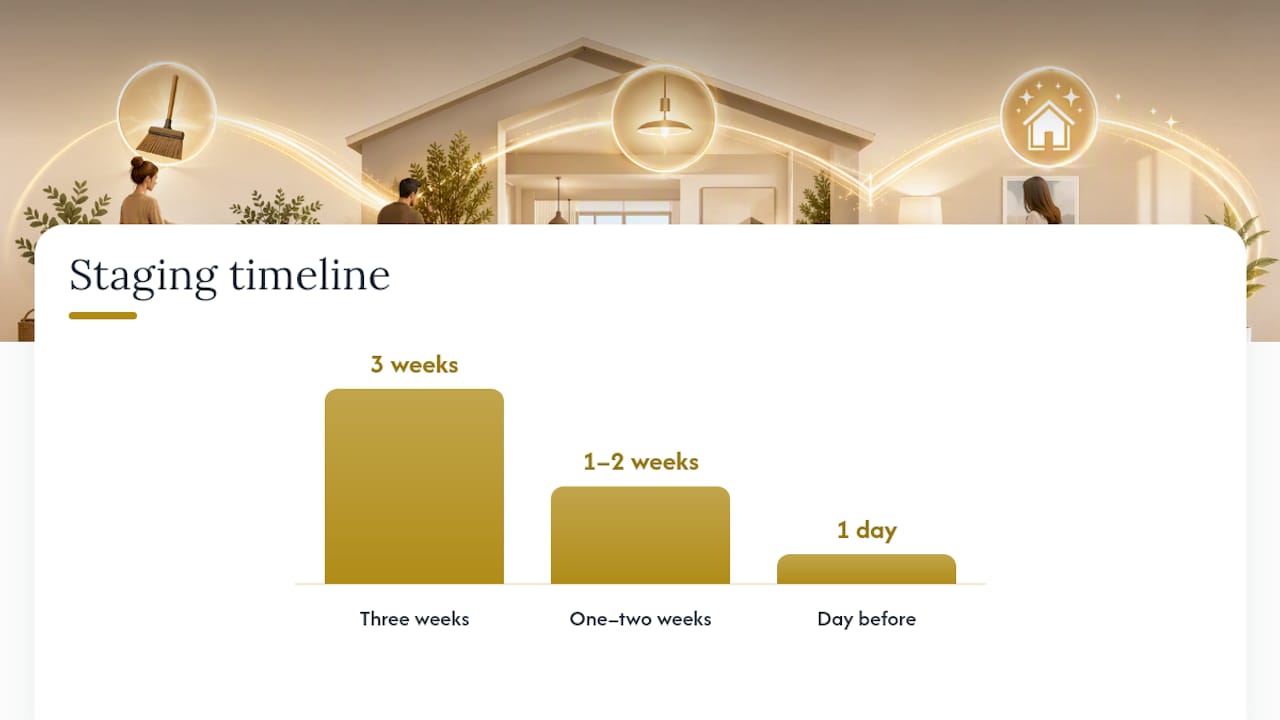
Staging works best when it's sequenced, not rushed the night before your agent puts up the sign. A staggered timeline keeps you from scrambling and lets each task build on the last.
Three weeks out, focus on the structural stuff:
- Walk every room and pull anything you haven't touched in six months into storage or donation piles.
- Book repairs for anything visibly broken. A cracked outlet cover, a leaky faucet, or a wobbly cabinet door reads as neglect to a buyer even if it's a five-minute fix.
- Order new light bulbs. Soft white or daylight bulbs make rooms feel warmer and closer to natural light than the yellow-tinted bulbs sitting in most builder-grade fixtures.
One to two weeks out, shift to presentation:
- Deep clean every surface, including baseboards, grout, and window tracks.
- Power wash the driveway, walkway, and any visible siding.
- Stage your highest-traffic rooms first: living room, kitchen, primary bedroom.
- Remove personal photos, collections, and anything overtly religious or political.
The day before, it's finishing touches only: fresh flowers, plumped pillows, a final surface wipe, and a walk-through with your phone camera to catch what your eyes have stopped noticing.
Rental furniture or a virtual staging service can fill gaps for vacant properties, since empty rooms often make it harder for buyers to picture themselves living there. Slipcovers, a well-placed mirror, and thrifted decor cost far less than new furniture and often do more work.
Pro Tip: Stage in this order: declutter first, clean second, decorate last. Skipping straight to decor on a cluttered, dirty room just makes the mess look more expensive.
Room-by-Room Staging Priorities That Buyers Actually Notice
Buyers form an opinion within seconds of walking into each room, so prioritize the spaces that do the most talking.
- Entry and curb appeal: Fresh mulch, a swept walkway, and a new welcome mat fix the first impression fast. A dated or dented front door is worth painting or replacing before you touch anything inside.
- Living room: Float furniture away from walls to create conversation areas and open sight lines. Oversized sectionals make rooms feel smaller, not cozier.
- Kitchen: Clear every counter down to two or three intentional items. Leave cabinets and pantry shelves visible and organized, since buyers open them and judge storage space on sight.
- Bathrooms: Fresh white towels, no personal toiletries on display, and touched-up grout or caulk. A cheap $15 caulk job can erase the appearance of years of wear.
- Bedrooms: Go hotel-style, meaning a made bed with simple linens and minimal nightstand clutter. Closets should look organized and roughly half full, because a stuffed closet reads as "not enough storage" even in a big house.
- Outdoor spaces: Clear the patio, add simple seating, and power wash anything visible from inside. Backyards sell the lifestyle, not just the square footage.
Curb appeal, kitchens, bathrooms, and lighting consistently rank as the highest-impact staging categories buyers respond to in person, more than trendy decor choices.
How Much Should You Spend on Open House Staging?
Budget scales with how much work the home needs and how long it's been sitting empty. A DIY approach, meaning decluttering, cleaning, and rearranging your own furniture, usually costs under $500 for supplies, paint touch-ups, and a few new light fixtures. Partial staging, where you hire someone to style just the living room and primary bedroom or rent a handful of key pieces, typically runs a few hundred to low thousands depending on your market. Full professional staging for a vacant or luxury home costs more but covers furniture rental, styling, and setup for the entire property.
Staging isn't guesswork dressed up as decorating. A significant share of buyers' agents report staged homes sell for more (https://www.nar.realtor/the-facts/consumer-guide-staging-your-house-for-a-sale), and the majority say staging shortens time on market.
Use these rules to decide your path:
- If the home is occupied, tidy, and mid-market, DIY subtraction and lighting fixes are usually enough.
- If the home is vacant, high-end, or you're on a 30-day timeline, a professional pass pays for itself.
- Always fix visible defects under $200 and two hours of labor before spending on decor. It's the highest-return move on the list.
Day-of Open House Checklist: Final Touches That Matter
The last hour before an open house is about the senses, not the spreadsheet. Buyers notice smell, temperature, and sound before they notice your throw pillows.
- Air out the house for at least 20 to 30 minutes, even in winter, then set the thermostat to a comfortable 68 to 72 degrees.
- Turn on every light, including closet and under-cabinet lights, even during the day.
- Empty all trash cans and run the dishwasher so the kitchen has no lingering odors.
- Swap in fresh linens and towels one last time.
- Play soft instrumental music at low volume, and skip strong candles or air fresheners in favor of something subtle like fresh-cut flowers.
Because staging has to be felt in person, not just seen in photos, temperature and scent do more work than most sellers expect.
Leave the property entirely during the showing. Buyers open up and talk more freely to your agent when the owner isn't standing in the kitchen.
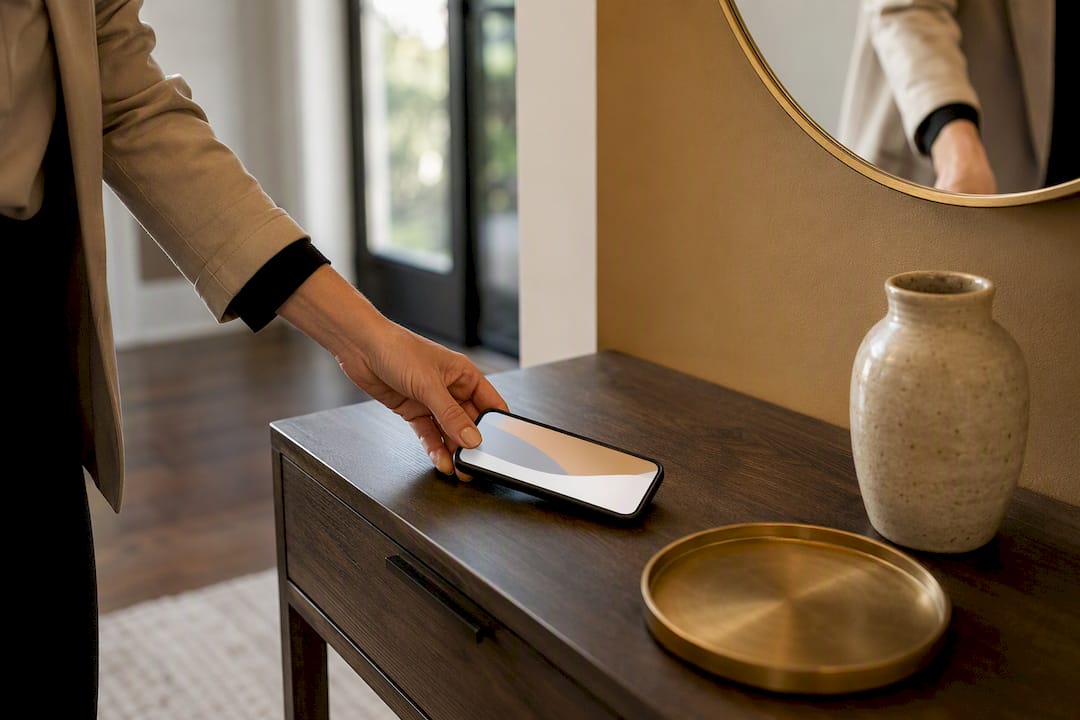
Pro Tip: Ask your agent to set up a digital sign-in sheet at the entry so you get every visitor's contact info for follow-up, without a clipboard cluttering your entry table.
When to Hire a Professional Stager Instead of DIY
Hire a professional when the property is vacant, priced above your local median, or you have less than two weeks before the listing goes live. Complex clutter, like a home with years of accumulated furniture or an owner who's moving across the country while trying to sell, also tips the scale toward professional help.
A stager or organizer typically provides:
- In-person styling for key rooms, including furniture placement and decor selection.
- Coordination of rental furniture for vacant homes.
- Concierge packing and moving support so staging and relocation happen on the same timeline instead of competing for your time.
- Targeted organizing services that make closets, pantries, and garages show their storage potential instead of hiding it.
Before hiring, ask what's included in the quote, whether furniture rental is separate, how many rooms get full styling versus a light touch, and what the timeline looks like from consultation to open house day. Flawlessly Functional's interior styling and home staging work in San Antonio pairs styling with organizing, and the company's 4.9 Google rating reflects clients who wanted both a beautiful listing and a lower-stress process getting there.
A Quick Note on What Actually Moves the Needle
If you take one thing from this guide, take subtraction over addition. Buyers remember space and light, not your decor choices, and clearing rooms out almost always beats filling them in. Stage for the buyer walking through, not for your own taste, and don't be afraid to lean on a local pro or your listing agent for market-specific adjustments before opening the doors.
— Steve
Get Your Home Open House Ready with Flawlessly Functional
Flawlessly Functional is the alternative to piecing together staging advice and doing it all yourself on a deadline: a San Antonio team that combines interior styling with the organizing work most sellers skip until it's too late. Rather than just rearranging furniture, the team clears closets, pantries, and storage so buyers see functional space, not just staged photos.

The process starts with a consultation where the team assesses your home, timeline, and budget, then builds a plan around your listing date. If you're also relocating, concierge moving and packing support can run in parallel so staging and your next move don't compete for the same week. Serving homeowners across the San Antonio, Texas area, Flawlessly Functional handles the luxury organizing work that makes a house show like a model home. Reach out through Flawlesslyfunctional to schedule a consultation before your open house date locks in.
Sources
For deeper reading: the NAR staging report covers buyer-agent statistics, Redfin's staging tips explain subtraction techniques, HGTV's staging essentials detail room priorities, and Extra Space Storage's budget guide covers lighting and low-cost tactics.
- Staging your house for a sale — National Association of REALTORS®
- 15 home-staging tips to sell your house fast — HGTV
- Staging your home on a budget — Extra Space Storage blog