

Most homeowners pay between $35 and $130 per hour for a professional organizer, with full projects typically landing between $227 and $640 depending on scope, according to Thumbtack’s national pricing data. Organizers bill three main ways: hourly, per-room flat rates, or bundled hour packages. Clutter level, your city, and whether you need materials or disposal hauled away are what push a quote toward the low or high end.
TL;DR:
Hourly rates for professional organizers range from $35 to $130, with the average around $55, influenced by experience, location, and scope.
Flat rates are common for predictable projects like single rooms or pantries, typically costing between $250 and $600.
Larger projects, such as whole homes, can cost from $5,000 to over $25,000 depending on complexity, custom materials, and additional services.
Additional fees, including consultation, materials, disposal, and travel, often significantly increase the final bill if not budgeted upfront.
Getting comparable quotes requires clear, detailed briefs covering scope, goals, deadlines, and access, to avoid surprises in total costs.
Table of Contents
How Much Does a Professional Organizer Cost Per Hour?
Hourly billing is the default for most residential jobs, and the spread is wider than people expect. Forbes Home reports an average rate around $55 per hour, with a realistic range of $35 to $130 depending on the organizer’s experience and your market. Extra Space Storage puts the common midpoint closer to $50 to $100 per hour, which lines up with what most metro-area organizers actually quote once you factor in supplies and disposal.
Why such a wide band? A newer organizer working solo in a smaller city might charge $35 an hour. A design-trained organizer running a two-person team in a major metro, who also sources bins, labels, and drawer inserts, can easily bill $150 or more per hour. You’re not just paying for time. You’re paying for systems knowledge, sourcing relationships, and how fast the person actually works once they’re in your closet.
Statistic Callout: The gap between a $35/hour organizer and a $130/hour organizer isn’t random. It usually tracks with three things: years in business, whether design/procurement is included, and local labor costs in your metro area.
Flat per-room and per-project rates show up when the scope is predictable. A single closet or a pantry is easy to price upfront because the organizer has done dozens just like it. Whole-home projects almost always stay hourly or move to a package, since nobody can accurately guess total hours until they see how many boxes are in your garage.
Packages are where the real savings happen. Buying hours in bulk, say a 20 or 40 hour block, commonly lowers your effective hourly rate compared to booking single sessions one at a time. Pricing data from CurrentCost shows organizers frequently structure tiered packages specifically to reward multi-room commitments, both to give clients predictability and to keep their own schedules full.
A few things to know before you book anything:
-
Consultation fees run $75 to $300 for most organizers, and this is often the first cost people forget to budget for.
-
Minimum hour requirements are common, usually 2 to 4 hours per visit, even for small jobs.
-
Travel fees may apply if you’re outside the organizer’s core service area, especially in sprawling metros.
-
Package pricing typically requires payment upfront or in a deposit, unlike hourly billing which is often paid per session.
The consultation itself matters more than people assume. It’s when the organizer assesses your clutter, measures your space, and figures out whether you need custom shelving or just better labeling. Skipping it to save $150 usually costs you more in a mismatched quote later.
What Does a Typical Organizing Project Cost by Room?
Numbers are easier to plan around when you can match them to your actual space. Here’s what real project ranges tend to look like, based on scope and hours required.
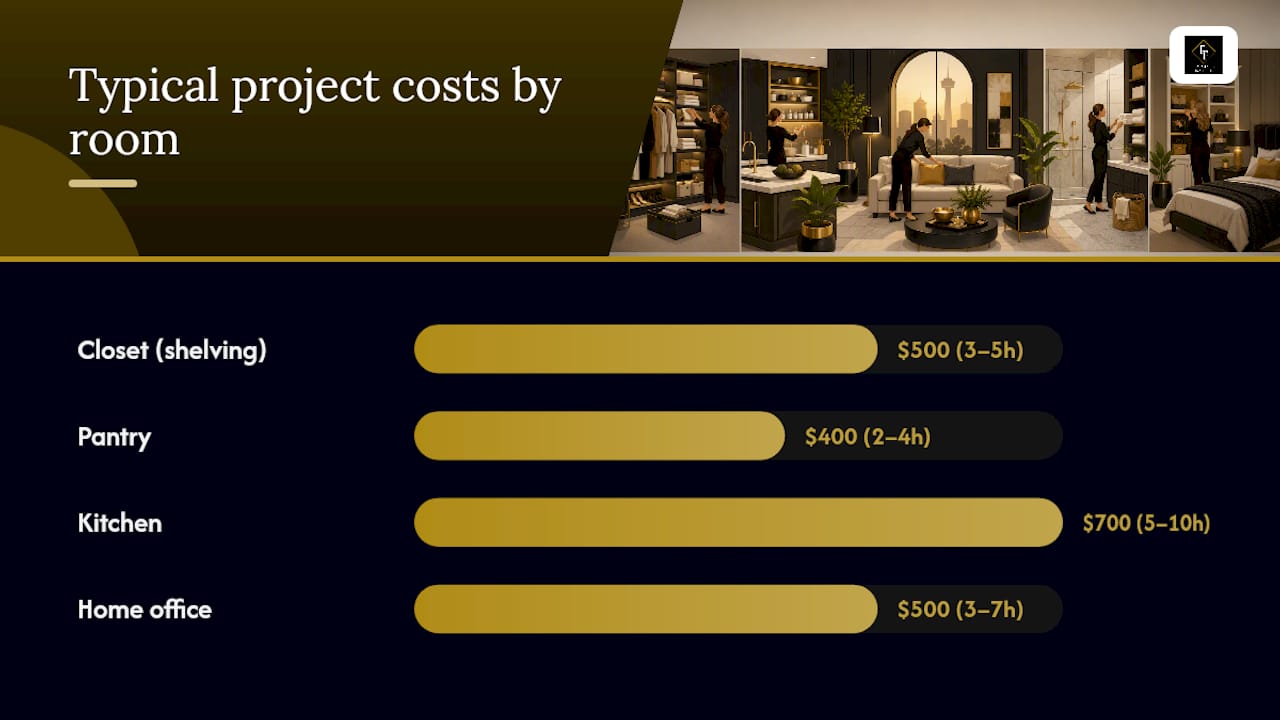
A single closet project generally falls within a moderate price range based on typical hours of work. That typically covers sorting, editing, and reorganizing what you already own. Custom shelving or drawer systems push the total higher, sometimes well past $1,500, because you’re now paying for materials and possibly installation on top of labor.
Pantries run a similar path but usually finish faster. Most pantry projects land between $450 and $800, covering 2 to 4 hours. Storage bins, labels, and risers are common add-ons that aren’t always included in the base quote.
Kitchens take longer because there’s more to sort through, cabinets, drawers, small appliances, and food storage all at once. Expect $800 to $2,000 for a full kitchen overhaul, often spread across 5 to 10 hours.
Home offices vary more than any other room. A light desk-and-shelf cleanup might run $600 to $1,200, while a full paperwork system with filing setup can reach $1,200 or more.
Garages are the wild card. Because clutter volume varies so dramatically, completed-task pricing data from Airtasker shows garage projects ranging from $400 all the way to $2,000, depending on whether you need shelving installed or just want existing storage reorganized.
Whole-home projects, the kind that touch every closet, cabinet, and drawer, typically run $5,000 to $25,000 or more according to CurrentCost’s detailed pricing breakdown. That top-end figure usually includes custom installs, concierge-level sourcing, or coordination with a move.
Thumbtack’s data puts the national average project cost at $227 to $640, with most people landing near $380. That figure sits comfortably inside the single-room ranges above, which tells you most people are hiring organizers for one problem area, not a full-house transformation.
What Actually Makes a Quote Go Up or Down?
Your zip code matters more than most people realize. Organizers in high-cost metro areas like Austin, San Antonio, or Dallas often charge more per hour than organizers in smaller towns, simply because their own overhead, rent, insurance, gas, is higher. That’s not padding. It’s basic cost-of-living math showing up in your invoice.
Clutter level changes everything about how long a job takes. A tidy closet that just needs a system refresh might take half the time of one packed with years of unsorted items. Specialized cases involving hoarding or extreme disorganization often require credentialed specialists and multi-day engagements, which raises both the hourly rate and the total hours needed.
A handful of variables consistently swing quotes higher:
-
Donation hauling and disposal fees, since most organizers don’t include dump runs or donation drop-offs in their base rate.
-
Custom materials and installed shelving, which usually get billed separately from labor.
-
Subcontracted trades, like an electrician or carpenter for built-ins, which the organizer coordinates but doesn’t perform.
-
Access issues, such as walk-up units, gated communities requiring visitor coordination, or extremely tight parking.
-
Rush scheduling, which some organizers price at a premium if you need the work done within days rather than weeks.
Pro Tip: Ask upfront whether disposal and donation runs are included in your quote or billed as a separate line item. This single question prevents more budget surprises than almost anything else on this list.
How Do You Get an Accurate, Comparable Quote?
The fastest way to get quotes you can actually compare is to send every organizer the same brief. Vague requests get vague pricing. A specific brief gets you a specific number.
-
List every room you want addressed, in priority order, so the organizer can scope realistically instead of guessing.
-
State your goals clearly, whether that’s donation-focused decluttering, a custom storage build, or prep before a move.
-
Note your timeline, including any hard deadlines like a listing date or house guest arrival.
-
Flag access details, such as building restrictions, pet considerations, or whether you’ll be present during the work.
-
Give a budget range, even a rough one, so the organizer can tell you early if your goals and budget don’t match.
Once you have quotes in hand, ask each organizer the same set of questions: What’s your minimum hour requirement? Do you charge travel fees, and at what distance? Are materials, disposal, and donation runs included or separate? Do you offer a follow-up visit, and is it billed extra?
The gap almost always comes down to how thoroughly they’ve accounted for prep and disposal time, not just their base rate.*
Package pricing makes sense once you’re committing to more than one room. Hourly billing makes more sense for a single, well-defined space where you’re not sure yet whether you’ll want more work later. A red flag worth taking seriously: any organizer who won’t give you a written estimate before starting, or who pressures you to sign a package deal before finishing a proper consultation.
Why Flawlessly Functional Know This Market
Flawlessly Functional is a luxury home organizing company built specifically for San Antonio homeowners who want more than a bin-and-label refresh. The company’s 4.9 Google rating reflects a client base that consistently comes back for repeat rooms and referrals, which tells you something about how the first project usually goes.
What separates a standard organizing job from a luxury one usually comes down to three things:
-
Custom-built storage systems designed around how you actually live, not generic bin sets pulled off a shelf.
-
Concierge moving coordination, where packing, unpacking, and organizing happen as one connected process instead of three separate vendors.
-
Design-level attention to aesthetics, so the finished space looks intentional, not just functional.
Those inclusions are exactly why luxury organizing is priced around experience rather than speed. You’re paying for a system that holds up months later, not just a clean photo on move-out day.
What I’d Tell a Friend Before They Book Anyone
Here’s what the research keeps confirming and most articles gloss over: the hourly rate you see quoted almost never matches what you pay. It’s the minimum hours, the disposal fees, and the materials line item that decide your real total, not the number on the organizer’s website.
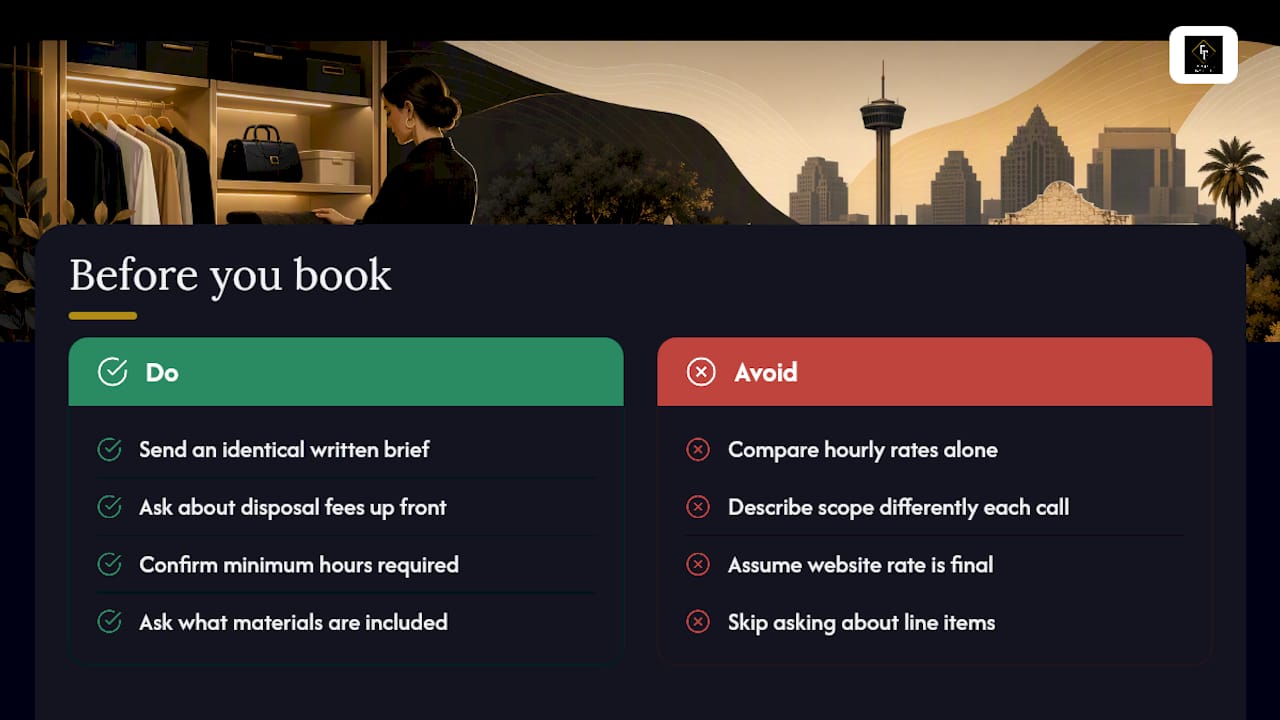
Conventional advice tells you to “get three quotes and compare.” That’s incomplete. Comparing three different hourly rates without comparing what’s included in each is how people end up shocked by a final invoice. Ask about disposal, minimums, and materials before you ever compare a single dollar figure.
If I had to prioritize one thing, it’s this: send every organizer the exact same brief. Not a phone call where you describe your garage differently each time, an actual written scope. That’s the only way $50 an hour and $95 an hour become numbers you can honestly compare.
— Steve
Ready for a Real Estimate? Here’s How Flawlessly Functional Prices It
Flawlessly Functional is the alternative to piecing together separate organizers, movers, and stagers for your San Antonio home. One team handles the luxury organizing, the concierge move, and the tailored storage design, so you’re not paying three markups and coordinating three schedules for what should be one project.

An initial consultation walks through your space, your goals, and your timeline, the same way it would with any organizer, but with an eye toward how systems will actually hold up in your specific home. Consultation details and crediting policies are discussed directly during that first conversation, so there are no surprises once the real quote arrives. If you’re also planning a move, concierge moving management folds into the same engagement instead of requiring a separate vendor.
If you’re ready to see real numbers for your space, reach out through the contact page and request a personalized estimate. And if a closet upgrade is part of your plan, this local guide on preparing for a closet renovation is worth a read before your consultation.
Sources
-
Professional Organizer Cost: By Hour And Project – Forbes Home
-
Professional Organizer Price List: Typical Costs, Ranges, and Tips 2026 – Current Cost
-
Guide to Hiring a Professional Organizer | Extra Space Storage