
Declutter, measure, switch to slim hangers, and add vertical storage. Those four moves can significantly increase usable closet capacity without adding a single square foot. A basic tidy typically takes a few hours; a full makeover with new hardware and containers can be done over a weekend. If your closet still feels tight after that, or you just don't have the weekend, that's the point at which a professional organizer starts to make financial sense instead of feeling like a luxury.
TL;DR:
- Switching to slim velvet hangers can free up to 30% more hanging space and prevent slipping, especially for silk and delicate fabrics.
- Measuring shelf depth, rod height, and door clearance before buying storage solutions prevents costly mismatches and ensures proper fit.
- Organizing with a systematic declutter, editing based on actual daily routines, and applying the one-in-one-out rule helps maintain an efficient closet long-term.
- Vertical storage options like over-the-door pockets, under-shelf baskets, and staggered rods can reclaim wasted ceiling and floor space effectively.
- Hiring a professional organizer becomes cost-effective when dealing with shared, custom, or complex closets that require tailored solutions and precise installation.
Table of Contents
- Small-Closet Toolkit: What to Buy First and What to Skip
- How Do You Organize a Small Closet Step by Step?
- Vertical Storage Tactics That Reclaim Wasted Inches
- Should You Hang It or Fold It? The Small-Closet Rule
- Shoe and Accessory Storage That Actually Stays Tidy
- Renter-Friendly and Budget-Conscious Options
- When Should You Hire a Professional Closet Organizer?
- Keeping a Small Closet Organized After the Makeover
- The Design-First Approach to Small Closets
- Get a Closet That Works Without Doing It Yourself
- Sources
Small-Closet Toolkit: What to Buy First and What to Skip
Not every closet gadget deserves a spot in your cart. Some purchases move the needle immediately; others just rearrange clutter into prettier containers. Here's what's actually worth your money, ranked by impact.
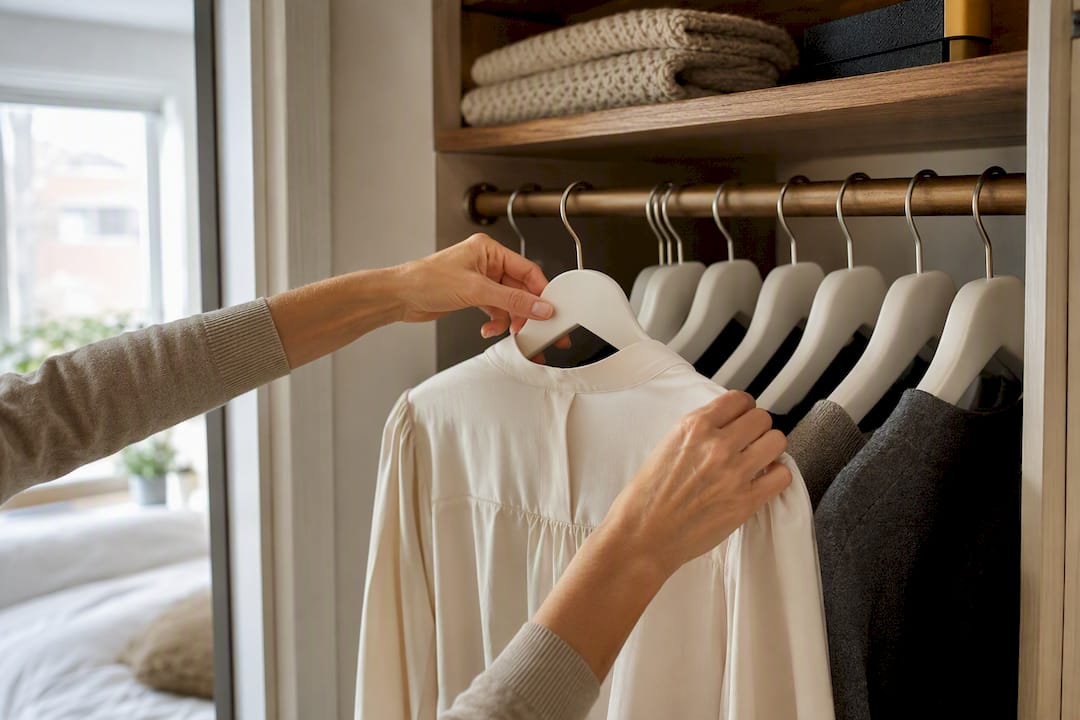
Slim, non-slip hangers come first, no exceptions. Swapping wire or thick plastic hangers for slim velvet versions frees up real hanging width because each hanger takes up a fraction of the space, and the non-slip surface keeps silky blouses and tank tops from sliding onto the floor. Buy a set sized to your actual wardrobe count, not a random pack of 20. Count your hanging items first.
After hangers, vertical accessories do the heaviest lifting. Experts point to over-the-door organizers, multi-tier shoe racks, and shelf dividers as the fastest way to add storage without touching a wall or a drywall anchor.
Here's a prioritized shopping list broken into budget tiers for different needs:
- Entry-level: slim hangers, one over-the-door organizer, and adhesive hooks.
- Moderate budget: add stackable shelf bins, drawer dividers, and a narrow rolling shoe rack.
- Higher budget: consider a double-hang rod system, modular shelf and drawer unit, or a compact freestanding closet kit.
Measure before buying anything in the $$ or $$$ tiers. A bin that's half an inch too deep won't sit flush on a shelf, and a double rod installed without checking your ceiling height will leave your longer coats dragging on the floor. Architectural Digest's roundup of small-space storage makes a good case for furniture that pulls double duty, like a stacking bin system that doubles as a bench, which matters most in closets so small that every inch of floor space counts.
How Do You Organize a Small Closet Step by Step?
Organizing a reach-in closet or a shallow bedroom closet works best as a sequence, not a scramble. Skip a step and you'll end up buying containers that don't fit or hanging a rod at the wrong height. Here's the order that actually works.
Statistically, a focused weekend cleanout can reset an entire small closet when it starts with a real declutter instead of jumping straight to storage bins.
1. Declutter using four piles
Pull everything out of the closet. Not some of it. Everything. Then sort into four piles:
- Keep — worn in the last 12 months, fits now, no repairs needed.
- Donate — good condition but unworn for a year or more.
- Discard — stained, torn, or missing its match.
- Sell — designer pieces, barely worn shoes, or anything with resale value worth the listing effort.
A fast decision rule: if you hesitate more than 10 seconds over an item, it goes in donate. Sentimental exceptions are fine, but cap them at one small bin.
2. Measure before you plan anything
Grab a tape measure and write down:
- Shelf depth (most closets run 12 to 16 inches)
- Total hanging rod width
- Rod height from floor to rod, and from rod to shelf above it
- Door swing clearance, especially for bifold or sliding doors
- Any dead vertical zones above the existing rod
Sketch a rough front-view rectangle of the closet on paper and mark where the rod, shelf, and floor space sit. This five-minute sketch is what Lowe's how-to guide and most professional organizers recommend before spending a dollar on organizers, because it prevents the single most common mistake: buying a bin that's an inch too tall for the shelf gap.
3. Map your layout
Decide between three layouts based on your measurements:
- Single rod for closets under five feet wide with mostly long garments (coats, dresses).
- Double rod (one rod stacked above another) for closets holding mostly shirts, folded pants, or kids' clothes, since it roughly doubles hanging capacity in the same footprint.
- Mixed hanging plus shelving for a closet that needs to hold both hanging clothes and folded items or shoes.
Assign a shoe zone (floor rack or over-door) and an accessory zone (hooks or a shelf bin) before you start hanging anything back up.
4. Install in the right order
Work top to bottom: ceiling-height shelving first, then rods, then door-mounted or floor items last. If you rent, choose tension rods, adhesive strip hooks rated for the actual weight you'll hang, and shelf risers that clip on without screws. If you own the space or have landlord approval, drilled brackets hold more weight and won't budge over time, but check for wiring or plumbing behind the wall before you drill.
Pro Tip: Test any adhesive hook for 24 hours with a light item before hanging anything heavy. Humidity and wall texture change how well adhesive actually holds, and a fallen hook with a load of belts is a cheap lesson to learn early.
Project timeline and materials checklist
| Phase | Time estimate | What you need |
|---|---|---|
| Declutter | 1 to 3 hours | Four bins or bags, trash bags |
| Measure and sketch | 15 minutes | Tape measure, paper, pencil |
| Shopping | 1 hour (online) or a store trip | Hangers, bins, hooks, rod hardware |
| Install | 2 to 4 hours | Drill or adhesive strips, level, stud finder |
| Final styling | 30 minutes | Labels, dividers |
Budget a full Saturday for a complete overhaul, or split it across two shorter evenings if that fits your schedule better.
Vertical Storage Tactics That Reclaim Wasted Inches
Most small closets waste more space above eye level than anywhere else. The ceiling zone above your rod and the floor beneath your hanging clothes are usually empty, and that's exactly where the next round of capacity comes from.
Top shelves work best with clear, labeled bins rather than loose stacks, because you can see what's inside without pulling every box down. Stick to lightweight, infrequently used items up top: off-season accessories, spare bedding, or memory boxes. Stack no more than two bins high on a standard shelf, and always put the heaviest bin on the bottom of any stack.
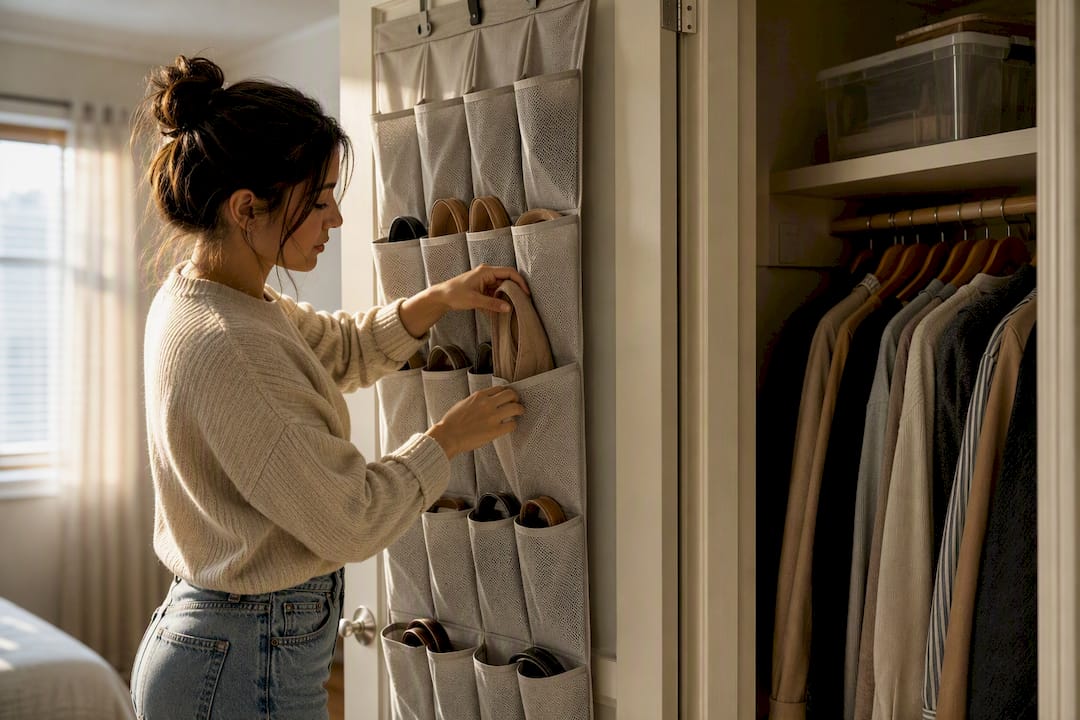
Over-the-door pockets and hanging shoe organizers are highly cost-effective purchases. A fabric or vinyl hanging organizer with 12 to 24 pockets can hold shoes, rolled belts, or small accessories, but check the door's actual clearance first. Most standard doors handle organizers up to about three inches deep before the door won't close.
Under-shelf baskets slide onto the underside of an existing shelf and add a second storage layer without touching a single wall. Apartment Therapy's small-space roundup points to these, plus slim rolling carts, as high-value tactics precisely because they use dead air instead of floor footprint. A peg rail mounted at mid-height gives you a spot for bags, hats, and scarves without eating into shelf or drawer space.
If your closet only has one rod, a second rod, staggered eight to ten inches lower and offset to one side, can multiply hanging capacity for shirts, folded slacks, and skirts. This works especially well in a shared closet where one person's items hang high and another's hang low.
- Adhesive hooks and strips: fine for lightweight items (under 5 pounds per hook), renter-safe, and removable without wall damage.
- Tension rods: good for a second hanging rod or a room-divider curtain, no drilling needed.
- Drilled brackets and rods: hold significantly more weight, best for owners or long-term renters with landlord sign-off.
- Freestanding shelving or a compact closet kit: the safest option when you can't mount anything at all.
Pro Tip: If you're not sure a wall can hold weight, hang the heaviest items closest to a stud rather than centered on drywall alone. A stud finder costs less than one broken hook and a hole to patch.
Should You Hang It or Fold It? The Small-Closet Rule
The fastest way to lose closet space is hanging things that should be folded. Structured items, anything prone to wrinkling, and pieces you wear often belong on the rod. Everything else belongs on a shelf or in a drawer.
Use this as your working rule:
- Hang: blazers, dress shirts, dresses, anything structured or wrinkle-prone, and items you wear at least weekly.
- Fold: T-shirts, jeans, sweaters, athletic wear, and anything you wear less than once a week.
- File-fold, don't stack: fold items into rectangles that stand upright side by side, like files in a drawer, rather than horizontal stacks that topple when you pull one item from the middle.
File-folding paired with uniform slim hangers is one of the most repeated recommendations from professional organizers, and for good reason: it means every folded item is visible at a glance instead of buried under three others.
Slim velvet hangers can free up meaningfully more rod space than bulky plastic or wire hangers, according to retail data on hanger dimensions, simply because their profile is a fraction as thick. Buy them in one color for visual calm, and buy enough for your actual wardrobe rather than guessing.
For file-folding, bin sizing depends on the garment:
- T-shirts: fold into thirds lengthwise, then in half; a shoebox-sized bin holds roughly 15 to 20 folded shirts standing upright.
- Jeans: fold in half lengthwise, then roll or fold into thirds; a slightly deeper bin (10 to 12 inches) works better than a shallow one.
- Sweaters: fold flat in thirds to avoid shoulder creases; stack no more than three high even when file-folded, since knitwear compresses and loses shape under weight.
Shelf dividers, whether wire, acrylic, or wood, keep folded stacks from leaning into each other and collapsing sideways. Add a label on each bin or divider section (by category, not by name) so anyone using the closet, including kids or a partner, puts things back where they belong.
Shoe and Accessory Storage That Actually Stays Tidy
Shoes are usually the first thing to sprawl across a small closet floor, and the fastest thing to fix. A slim shoe rack that fits along one wall can hold multiple pairs of shoes within the same footprint a jumble of loose shoes takes up. Over-the-door shoe organizers work well for closets with no floor space at all, though they suit lighter shoes better than heavy boots, which tend to sag the fabric pockets over time.
Clear shoe boxes solve the "I know I own these, where are they" problem. Stack them no more than three high, labeled by category (sneakers, boots, sandals) rather than by specific pair, since labels by category survive longer as your shoe collection changes.
For accessories, small systems beat big bins every time:
- Belts and ties: a peg strip or a slim hanging organizer with individual loops.
- Scarves: rolled and placed in a shallow drawer divider, or hung on a multi-ring hanger.
- Jewelry: a small hanging organizer with clear pockets, or a shallow drawer insert with dividers.
- Bags and purses: shelf-mounted hooks or a dedicated cubby, stuffed with tissue paper to hold their shape.
Seasonal rotation frees up real floor space. Move off-season shoes (winter boots in summer, sandals in winter) into under-bed storage bins or a top-shelf bin, and swap them back at the change of season. Apartment Therapy's small-space guide calls under-bed storage one of the highest-value moves for tiny apartments specifically because it's space that's otherwise doing nothing.
Renter-Friendly and Budget-Conscious Options
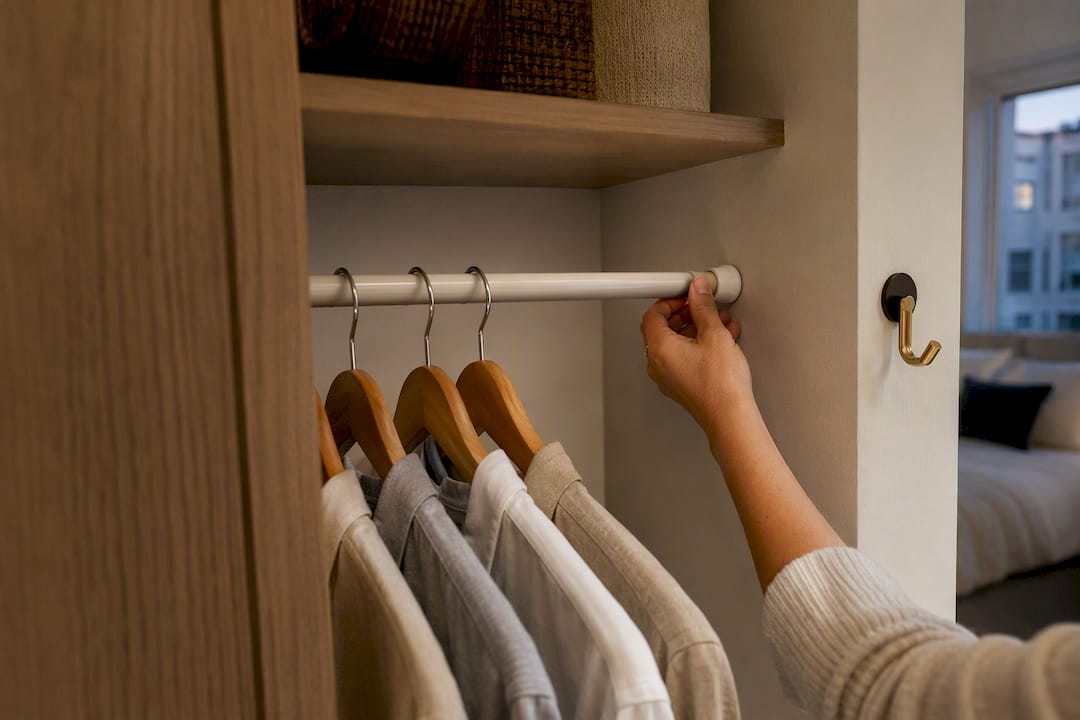
You don't need a landlord's permission or a power drill to fix a small closet. Tension rods hold a second hanging layer or a curtain divider without a single screw, and most support 10 to 25 pounds depending on the model, which is plenty for shirts or a light curtain. Adhesive hooks and strips work for anything under about 5 pounds per hook, and they come off cleanly if you follow the removal instructions instead of yanking them.
Removable shelving, the kind that clips onto an existing rod or slides into a track system, adds a shelf without touching drywall at all. It's a smart middle step between "nothing" and "drilled brackets."
If your closet has zero built-in shelving, a freestanding wardrobe or a compact closet kit is worth considering. Ready-to-assemble freestanding systems, often around 24 inches wide with a hanging rod, shelves, and drawers built in, cost more than adhesive hooks but move with you if you relocate, which makes them a genuinely different category from permanent built-ins.
Sizing organizers correctly the first time saves both money and return trips. A quick measurement step before buying is the difference between a bin that slides in cleanly and one you're stuck reselling at a loss.
A few low-cost DIY swaps worth trying before buying anything new:
- A repurposed bookcase, laid on its back or stood upright, makes a serviceable shoe or bin shelf.
- Woven baskets from a discount store double as drawer replacements for folded items.
- Inexpensive shelf risers turn one flat shelf into two usable levels for shoes or folded stacks.
When Should You Hire a Professional Closet Organizer?
There's a point where the DIY playbook stops being the efficient choice, and that point usually shows up when the closet is shared by two or more people, when the space needs custom shelving cut to odd dimensions, or when you simply don't have a spare weekend. A professional organizer's workflow typically runs through five stages: an audit of what you own and how you use the space, custom zoning based on your actual routines, sourcing the right containers and hardware, installation, and a coaching session so the system sticks after they leave.
Small, targeted changes to layout and hardware often outperform a full renovation, which is worth knowing before anyone assumes a small closet problem requires ripping out drywall. The outcome that matters most isn't a prettier closet. It's time saved every morning and fewer decisions about where things go.
A closet that's organized around how you actually get dressed each morning, not just how it photographs, is the difference between a system that lasts and one that falls apart in six weeks.
Flawlessly Functional approaches organizing projects this way for homeowners across San Antonio, treating each closet as a custom layout problem rather than a one-size-fits-all install, and the company's 4.9 Google rating reflects clients who've gone through that exact process.
If you're weighing a single closet against a whole-home reset, or a closet project tied to an upcoming move, that's a good moment to bring in a pro rather than pushing through alone. A DIY weekend is fine for one reach-in closet. A shared primary closet, a nursery closet doubling as storage, or a move-triggered overhaul is where the emotional weight of a cluttered space tends to justify the cost of hiring it out.
Keeping a Small Closet Organized After the Makeover
A system only works if it survives real life, and real life means clothes get shoved back in wrong at 7 a.m. Build a maintenance habit into your calendar instead of waiting for the closet to fall apart again.
- Run a 15-minute monthly tidy. Rehang anything that's slipped off a hanger, refold anything that's collapsed sideways, and pull one item you haven't worn in 90 days for the donate pile.
- Rotate seasonally. Swap heavy coats for lightweight layers (or the reverse) twice a year, and re-label bins going into storage so you're not guessing next season.
- Apply a one-in, one-out rule. When a new item comes in, something comparable goes out. This single habit prevents the slow creep back to a packed closet.
- Set a frequency threshold. If you haven't worn or used something in a full year, it moves to donate, no exceptions for "maybe someday."
- Refresh instead of rebuild. If the closet starts feeling cluttered again, check whether it's a labeling problem or a genuine overflow issue before assuming you need to redo the whole system.
Pro Tip: Put a recurring 15-minute reminder on your phone for the first Saturday of each month. A tiny scheduled habit beats a big unscheduled overhaul every time, because the mess never gets big enough to feel overwhelming in the first place.
The Design-First Approach to Small Closets
Most advice about small closets treats it as a math problem: fit more stuff into the same box. That's backwards. The closets that actually stay organized are the ones designed around how a person gets dressed, not around cramming in maximum volume.
A closet with room to see every folded shirt, every pair of shoes, and every jacket at a glance will get used correctly every single morning. A closet stuffed to its absolute physical limit will get abandoned within a month, because nobody wants to dig through a jammed shelf before 8 a.m. That gap between theoretical capacity and daily usability is the part most guides skip.
The one habit I'd tell anyone to start with, before buying a single hanger: stand in front of your closet for two minutes and watch what you actually reach for. That's your real zoning map, not a Pinterest board.
Flawlessly Functional's take on organizing as an experience rather than a race lines up with what tends to hold up over time in a small closet: fewer, better-chosen systems beat a pile of gadgets every time.
— Steve
Get a Closet That Works Without Doing It Yourself
Everything above works, and plenty of readers will get a great result with a Saturday, a tape measure, and a stack of slim hangers. But if you'd rather skip the trial-and-error sizing mistakes, the trip back to the store for the wrong bin, and the install afternoon, professional services can handle the whole process from measurement to final styling in one visit instead of a weekend of yours.

A consult typically starts with a walkthrough of the closet and your daily routine, so the layout gets built around how you actually get dressed rather than a generic template, as explained in How San Antonio Homeowners Can Declutter and Organize Before a Closet Upgrade. From there, the team scopes the project, sources the hardware and containers sized to your exact space, and installs everything in a single coordinated visit. For San Antonio homeowners juggling a closet overhaul alongside a move, Flawlessly Functional's moving and unpacking services can fold both projects into one timeline instead of two separate headaches.
If a small closet has been on your fix-it list for months, book a consultation and get it handled properly, one time.
Sources
- Selfstorage
- How to Maximize Space in a Small Closet | Lowe's How-To
- Storage ideas for small spaces | Architectural Digest
- Small space storage ideas | Apartment Therapy
- Ways to maximize bedroom closet vertical storage | House Digest