
The first hour matters more than any other. Open the essentials box, make every bed, get one bathroom fully stocked, and unpack basic kitchen gear before touching anything else. That covers sleep, hygiene, and food for day one. Aim to have core living spaces functional within 3 to 7 days and the last box gone within 2 to 4 weeks. Follow that order and you skip the redo work that turns move-in week into a month of tripping over boxes.
TL;DR:
- Unpack and set up core living essentials within the first three to five days, focusing on the kitchen, bathroom, and bedroom to ensure basic functions.
- Prioritize safety checks, utilities, and essential items before opening boxes, and stage empty boxes and cleaning supplies nearby to avoid rework.
- Limit unpacking to one to two rooms daily over three to seven days, using either a sort-first or one-room-finish approach based on household size and needs.
- Purge unnecessary or duplicate items while unpacking by applying the 30-day rule and keeping donation and trash boxes close to avoid accumulating clutter.
- Delay buying storage systems until after 30 days to understand actual household needs, and consider professional unpacking services for a faster, customized setup.
Table of Contents
- Priority Checklist for the First 48 Hours
- Room-by-Room Plan: What to Unpack First and How Long It Takes
- How Long Should Unpacking Take?
- Sort-First or One-Room-Finish: Which Method Fits Your Move?
- What Should You Purge While You Unpack?
- Unpacking Supplies and Quick Staging Hacks
- Setting a Box-Free Deadline
- Handling Fragile Items and Art During Unpacking
- Organizing and Setting Up Utilities and Devices After Unpacking
- Setting Up Storage Solutions to Maintain Organization
- Managing Paperwork and Personal Documents During Unpacking
- Functionality First, Refinement Later
- How Flawlessly Functional Handles Your Unpacking
- Sources
Priority Checklist for the First 48 Hours
Before you unpack a single box, walk the house and check the basics. Test smoke detectors, locate the circuit breaker panel, and confirm water and gas are on. This five-minute sweep prevents a much worse problem later.
Movers and relocation guides consistently recommend a pre-unpacking checklist before anything else gets opened:
- Utilities and safety first: smoke detectors, breaker panel, water shutoff location.
- Essentials box within reach: medications, phone chargers, toiletries, one to two days of clothing, and basic cookware.
- Furniture before boxes: beds, dressers, and sofas go in place before you unpack anything small, so you're not moving furniture around already-organized shelves.
- Stage empty boxes near the door and do a quick wipe-down of counters and shelves before items go in them.
Skip the furniture-first step and you'll spend day three rearranging a dresser around boxes you already unpacked into it. That's wasted labor you can avoid entirely.
Room-by-Room Plan: What to Unpack First and How Long It Takes
Prioritizing kitchen, bathrooms, and bedrooms is the order most professional organizers and moving companies land on, because those three rooms cover eating, hygiene, and sleep. Here's the realistic sequence and time commitment for each space.
- Kitchen (3 to 5 hours for a basic pass). Unpack dishes, glasses, and everyday cookware first. Set up coffee or tea supplies immediately. Save the pantry deep-organize and small appliance placement for later; you just need to cook a meal tonight.
- Bathrooms (1 to 2 hours). Get one bathroom fully functional before touching the others: towels hung, shower curtain up, toiletries out, toilet paper stocked. A half-finished second bathroom can wait.
- Master bedroom (2 to 3 hours). Bed frame and mattress first, then a quick clothing triage: hang what you'll wear this week, box the rest for later. You don't need a perfect closet on night one, you need a made bed.
- Kids' rooms (variable, prioritize comfort). Set up a comfort box with a few favorite toys, bedding, and a night light before worrying about the rest of the toy collection. Kids adjust faster when their room feels familiar fast, even if the closet is still full of boxes.
- Living room and shared spaces. Furniture placement comes first, then electronics, then décor. Hanging art and arranging shelves is a week two task, not a day one task.
- Home office. If you work remotely, move this up the list. A functioning desk and internet connection on day one or two saves you from losing income to moving chaos.
- Garage and storage areas. Defer this to week two. Use labeled bins rather than loose stacking, since this is the space most likely to become permanent clutter if you rush it.
Pro Tip: Unpack one full room to completion before starting the next, even if it's just the bathroom. Having one finished, calm space in an otherwise chaotic house does more for your stress level than five half-done rooms.
How Long Should Unpacking Take?
Plan on 3 to 7 days to get core rooms functional, with a full box-free timeline of 2 to 4 weeks for the entire house. That range accounts for household size, how much you packed, and whether you're unpacking alone or with help.
Pace yourself with structure instead of stamina. Work in 45-minute sessions followed by a 15-minute break, and use the 10-minute rule for small, annoying tasks: if a job takes less than 10 minutes, just do it instead of letting it pile up.
- Limit yourself to 1 to 2 rooms per day, even if you have energy for more.
- Schedule a dedicated finishing half-day near the end for the stray boxes every move leaves behind.
- Treat the 45/15 work cycle as a floor, not a ceiling. Adjust it if your body needs longer breaks.
Sort-First or One-Room-Finish: Which Method Fits Your Move?
Two approaches dominate professional-organizer advice, and they solve different problems.
Sort-first means opening every box, sorting contents by category across the house, then distributing items room by room. It's efficient for households with lots of small, mixed items, but it delays the moment any single room feels finished.
One-room-finish means picking one room, completing it entirely, then moving to the next. It's slower box-for-box but creates an early sanctuary. This works well for families with kids, where one finished bedroom lowers everyone's stress fast.
- Sort-first fits smaller households and heavily mixed boxes.
- One-room-finish fits families and anyone who needs a psychological win early in the process.
- A hybrid works for most movers: sort small, mixed items to their destination rooms first, then fully complete one high-impact room, usually the kitchen or master bedroom, before moving to the next.
Pro Tip: If you're hiring help for the unpack, have someone from the household present to direct placement. Unsupervised placement often looks organized on day one but requires rework once you realize the silverware drawer is nowhere near the dishwasher. Flawlesslyfunctional's organizing services build systems around how you actually live, not just where boxes happen to land.
What Should You Purge While You Unpack?
Ask one question for every item you pull out of a box: does this earn a place in the new home? If the answer is no, it doesn't get unpacked, it goes straight into a donation or trash box you keep in the room with you.
- Keep donation and trash boxes staged in each room, not in the garage, so purging happens in the moment instead of "later."
- Apply the 30-day rule: if a box remains unopened after 30 days, donate it without opening it. If you haven't needed the contents in a month, you likely won't.
- Purge duplicates first: the second can opener, the third set of mismatched glasses, extra phone chargers you forgot you had.
- Toss expired medications and anything broken during the move rather than packing it into a new drawer "to deal with later."
New homes inherit old clutter fast if you skip this step. The emotional relief of a genuinely organized space comes largely from what you chose not to keep.
Unpacking Supplies and Quick Staging Hacks
Have your kit ready before the truck arrives, not after. Basic unpacking supplies include a box cutter, packing tape, a permanent marker, trash bags, cleaning wipes, and a basic tool kit for reassembling furniture.
- Use painter's tape and a marker for temporary labels on shelves and drawers, so you can adjust placement later without leaving sticky residue.
- Set up a folding table as a sorting station for small items before they go into drawers.
- Use clear bins for miscellaneous items you're not ready to place, and designate one corner as the official empty-box staging zone so flattened cardboard doesn't spread through the house.
Setting a Box-Free Deadline
Pick a date 2 to 4 weeks out and write it somewhere visible, on the fridge, the calendar app, wherever you'll actually see it.
- Break down flattened boxes and recycle what you can; many curbside programs take cardboard if it's flattened and free of tape.
- List usable boxes locally through neighborhood groups or donate them to someone else who's moving.
- Hold off on buying storage bins, shelf dividers, or closet systems until you've lived in the space for 30 days. You'll know your real storage gaps by then instead of guessing.
Handling Fragile Items and Art During Unpacking
Fragile items and artwork deserve their own pass, separate from the general room-by-room push. Unwrap breakables over a padded surface, a folded towel or moving blanket works fine, and keep original packing paper nearby in case an item needs to go back into storage.
Unpack fragile boxes in a clear, low-traffic area rather than a busy kitchen counter where an elbow can end a family heirloom. Check each piece against the box's inventory as you unwrap it; damage claims are far easier to file within the first few days than weeks later.
Hold off on hanging art until furniture is placed. Wall arrangements depend on where the sofa and bed actually land, not where you assumed they'd go on the floor plan. Group similar-sized frames together and lean them against a wall in the room where they'll hang, so you can live with the space for a few days before committing to nail holes.
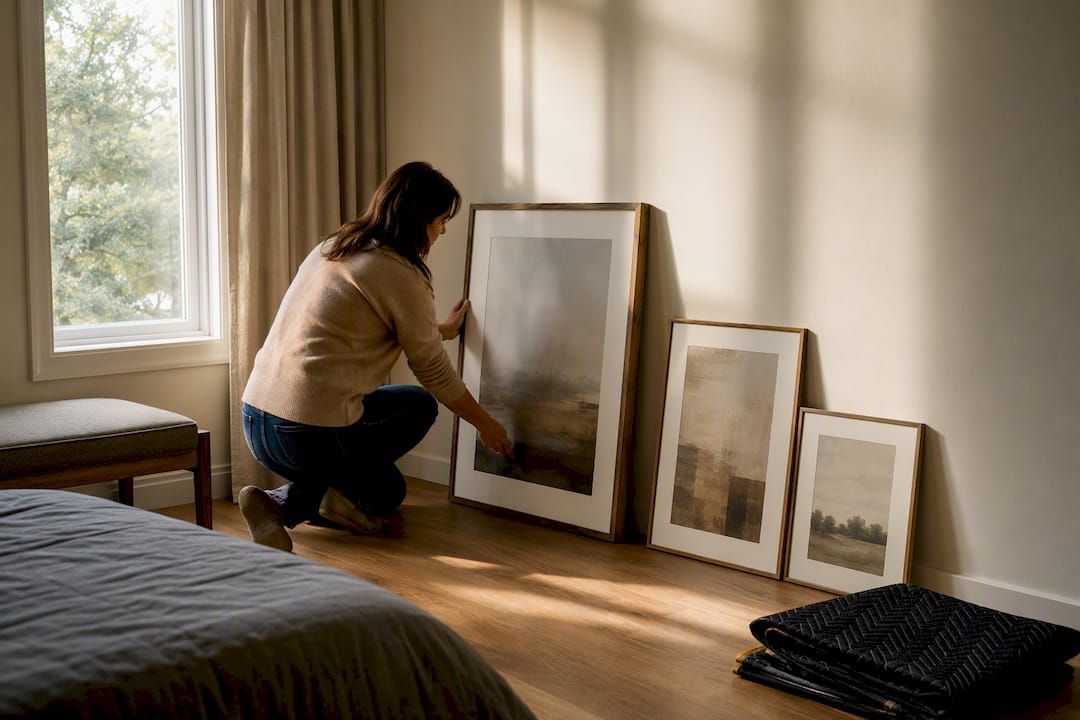
For oversized or valuable pieces, mirrors, large canvases, sculptural objects, wait until you have a second person available. Rushing a heavy frame up a staircase alone is how minor moves turn into expensive repairs. If you packed anything in a crate or custom box, keep that packaging until the item is hung and confirmed undamaged, in case it needs to travel again for insurance documentation.
Organizing and Setting Up Utilities and Devices After Unpacking
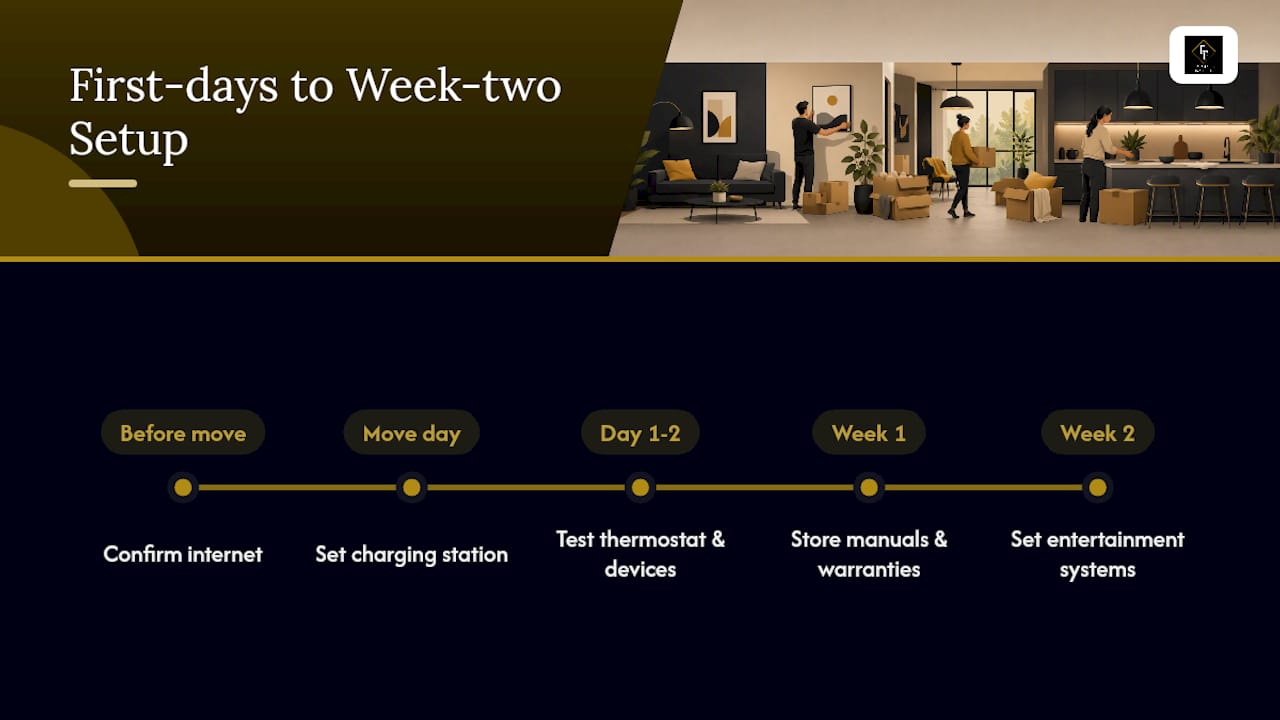
Confirm internet and Wi-Fi setup early, ideally before move day if your provider allows a pre-scheduled installation. Working internet on day one matters more for household sanity than a fully unpacked closet.
Set up a charging station in a central spot, a kitchen counter or entry table, before you start hunting for outlets room by room. Label cords as you unpack electronics; a week of untangling unlabeled cables is entirely avoidable with five minutes of masking tape and a marker during setup.
Locate and test your thermostat, water heater, and any smart home devices (doorbells, locks, cameras) within the first two days. If your new home has a security system or smart lock, reprogram codes immediately rather than leaving previous owner or tenant access active.
Keep a small folder or drawer for appliance manuals and warranty cards as you unpack each device. You'll want these within reach the first time something doesn't work as expected, not buried in a box in the garage. For entertainment systems and computer setups, treat this as a week two task unless remote work requires immediate connectivity, it's rarely urgent enough to compete with kitchen and bathroom priorities.
Setting Up Storage Solutions to Maintain Organization
Resist buying storage products before you've lived in the space. What looks like a closet problem on day three often turns out to be a kitchen problem once you see how your family actually moves through the house.
Start with what you already own: use moving boxes temporarily as drawer dividers, repurpose baskets you packed for one room in another, and delay any bin, shelf, or closet system purchase until the 30-day mark. By then you'll know exactly where the bottlenecks are, the entryway that never has enough hook space, the pantry shelf that's always too shallow, instead of guessing from a store aisle.
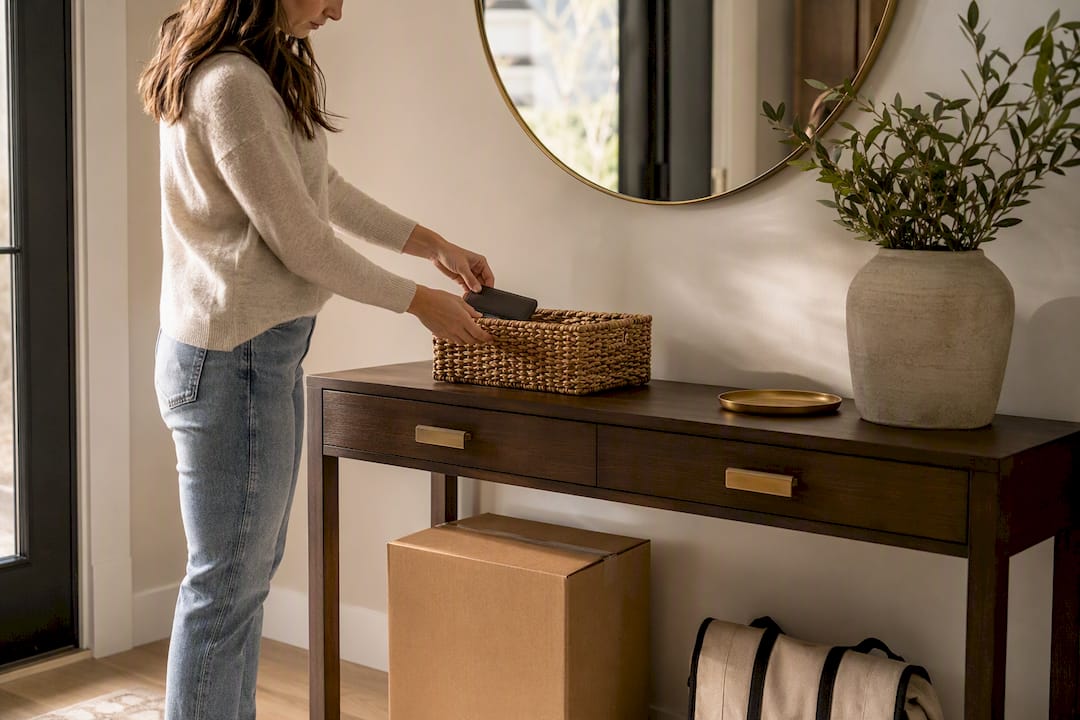
When you do invest in systems, prioritize daily-use zones first: entryway, kitchen, and primary closets see the most traffic and benefit most from real organization tips to smooth the transition. Garage and secondary storage areas can wait even longer, since those spaces rarely disrupt daily life the way a chaotic entryway does.
If the process of matching bins to actual need feels like more than you want to tackle alone, that's precisely the gap a professional organizing service is built to close, designing systems around how your household actually functions rather than a generic template.
Managing Paperwork and Personal Documents During Unpacking
Important documents, birth certificates, passports, closing paperwork, medical records, need a designated home before moving day, not after. Pack them separately from general office boxes and carry them with you in the vehicle if possible, rather than trusting them to a moving truck.
Once you arrive, set up a temporary filing system immediately: a portable file box or accordion folder works fine for the first few weeks. Sort documents into broad categories, financial, medical, legal, home-related, rather than trying to build a perfect filing cabinet on day one.
Deal with time-sensitive paperwork first: address changes for banks and insurance, utility transfers, school enrollment forms if you're relocating with kids. These have real deadlines that don't pause for your unpacking schedule.
Shred anything you no longer need as you go through boxes; movers routinely find years of outdated statements and expired warranties that never needed to make the trip. A permanent filing solution, whether that's a home office cabinet or a closet system, is a week three or four project. Getting documents out of moving boxes and into a temporary, findable system matters far more in the first few days than making it pretty.
Functionality First, Refinement Later
Give yourself permission to be functional before you're finished. The first 30 days should focus on systems that work, not systems that look perfect, drawers that make sense, not drawers that are styled.
Refinement comes later, once you've actually lived in the space long enough to know what needs to change. If the unpacking process feels bigger than your schedule allows, particularly for a long-distance move, concierge unpacking help exists for exactly that gap between moving day and a home that actually works.
— Steve
How Flawlessly Functional Handles Your Unpacking
Flawlessly Functional replaces the guesswork of unpacking alone with a done-for-you process built around how your household actually lives, not a generic box-by-box checklist.

The service covers concierge moving management, room-by-room unpacking, furniture placement, and lasting storage systems designed to fit your space instead of forcing your belongings into someone else's template. It's built for busy homeowners, families juggling kids and work during a move, and anyone relocating from out of town who doesn't have weeks to spare on cardboard and packing paper. Every project is customized, so a long-distance move gets a different plan than a downsize across town. If you'd rather skip the 45/15 timers and the multi-week unpacking grind, explore Flawlessly Functional's organizing services and get a plan built around your actual move-in date.
Sources
- Consumer Guide: 10 Tips for Unpacking Smartly After a Move | NAR
- How to Unpack Efficiently After an Interstate Move | American Van Lines
- How to Unpack After Moving - PublicStorage
- Tips for unpacking after your move | United Van Lines